BOTANICAL IDENTITY
The right name is the first step.
Also known as: No synonyms listed.
Do not transfer leaf data to sap or gemmotherapy.
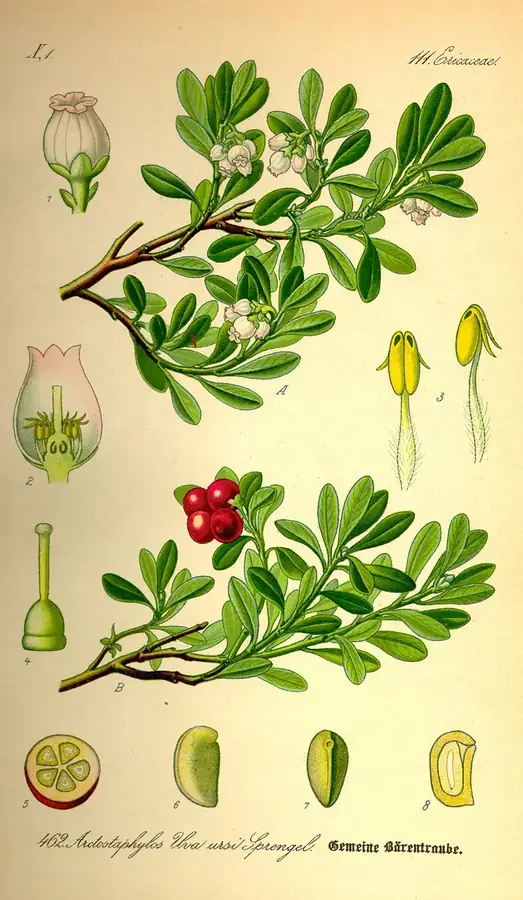
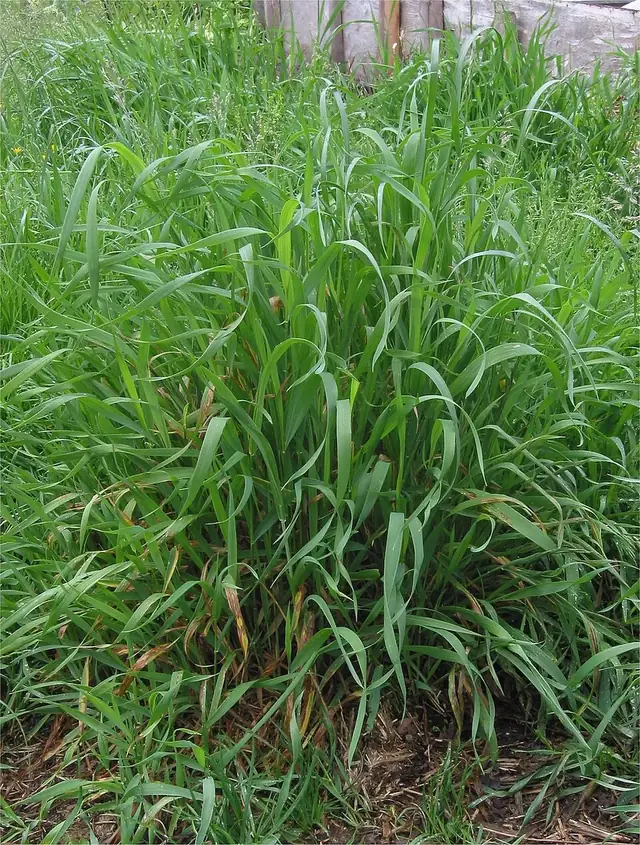
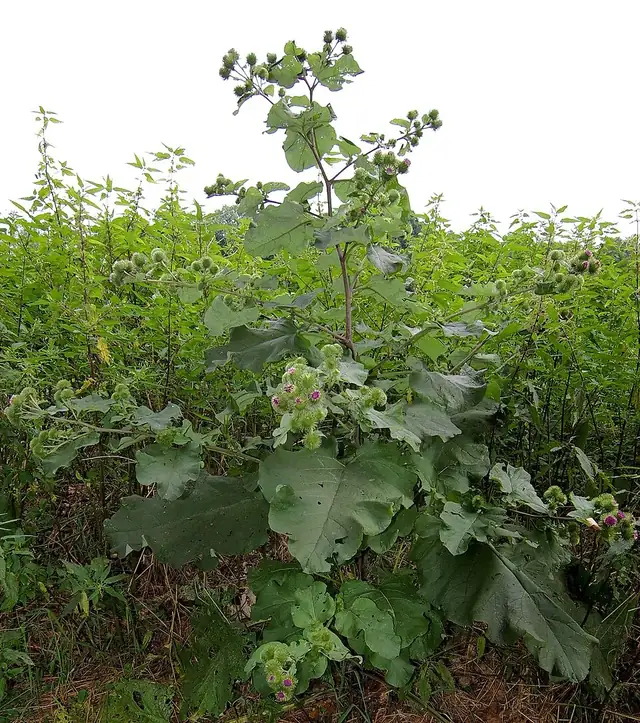
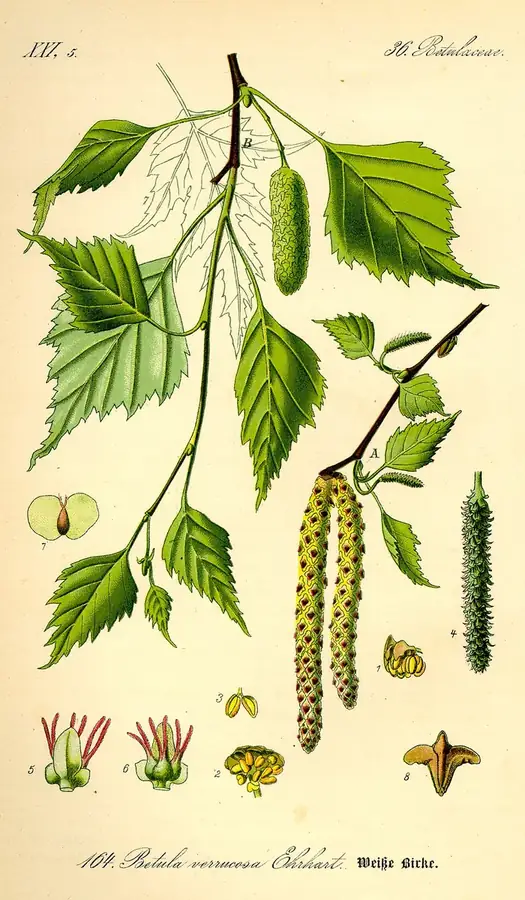
An illustration is not enough to identify a plant for consumption. Do not forage for a species based solely on this profile.
01 · UNDERSTAND
Properties & uses.
Urinary elimination
Traditional use to increase urine production as an adjunct for minor complaints.
Read the sourceThe traditional uses described are not clinical proof of effectiveness. Evidence for one preparation cannot automatically be applied to another.
02 · UNDERSTAND THE ACTION
How does the plant act?
Birch leaves are traditionally used to increase urination in support of minor complaints. The EMA dossier covers Betula pendula, Betula pubescens and their hybrids together: it does not separately demonstrate any superiority of silver birch. Sap, bark and buds are not covered by this extrapolation of the documentation.
Constituents to know.
Their presence and quantity depend on the plant part and preparation.
- Flavonoids
- Hyperoside and other quercetin derivatives occur in the leaf. They help characterize it, but no constituent with certain therapeutic activity is identified.Read the reference
Increased urine output
This is a traditional adjunctive use. Older experiments comparing infusion with water alone did not show a significant increase in urine output.
Read the referenceUrinary disorders: not evidence of an antibiotic effect
The dossier does not justify turning experimental activity or a change in microbe count into a stand-alone treatment for an infection.
Read the referenceWhat this means for preparation.
Checking for “leaves” on the label avoids transferring this information to a course of sap. Use intended to increase urine output also requires being able to drink normally.
03 · EXAMINE THE EVIDENCE
What the research shows.
A laboratory or animal result alone does not demonstrate a benefit in humans. Each result must be read alongside the preparation studied and its limitations.
Limited human evidence
- Type of research
- EMA report examining two clinical studies, among other evidence.
- Preparation concerned
- Leaf preparations from the shared botanical dossier.
- Observed results
- The methods were insufficient to establish recognized clinical efficacy; the evidence level remains traditional.
- Limitations to consider
- Small studies with different indications and preparations; no result specific to Betula pendula can be isolated with confidence.
What can we take from this?
The leaf is not a proven way to dissolve stones or “detoxify” the body. Severe heart or kidney disease requiring fluid restriction changes the safety of this use.
Documentary review dated 09/10/2026. The references remain available to check the context.
04 · CHOOSE A PREPARATION
One plant, several preparations.
Only forms documented in this profile’s sources are presented.
InfusionLeaves · Route: oral
Dried, comminuted leaves.
Please note: Check the preparation and its leaflet; concentrations are not interchangeable.
Read the sourcePowder or extractLeaves · Route: oral
Defined solid or liquid forms.
Please note: Check the preparation and its leaflet; concentrations are not interchangeable.
Read the source05 · BEFORE ANY USE
Precautions & contraindications.
This guidance does not cover every individual situation. Missing information is not a guarantee of safety.
Contraindications
- Allergy to birch leaves or pollen.
- Fluid restriction or severe heart/kidney disease: do not use.
Medicine interactions
- Supplements: have any combination with an antidiuretic medicine checked.
Adverse effects
- Digestive disorders and allergic skin or nasal reactions reported.
Pregnancy & breastfeeding
Medicinal use is not recommended during pregnancy and breastfeeding due to insufficient data.
Children & adolescents
Not recommended under 12 years of age.
If symptoms persist, worsen or are unusual, consult a healthcare professional. In an emergency, contact the emergency services.
06 · PUTTING KNOWLEDGE INTO PRACTICE
Preparations & recipes.
No home recipe is provided in this profile. For an appropriate preparation, refer to the product leaflet and ask your pharmacist for advice.
07 · CHECK THE SOURCES
Sources for this profile.
- EMA — Betulae folium: official dossierAccessed on 09/10/2026
- ANSES — precautions for plants in food supplements, June 2023 summaryAccessed on 09/10/2026
- EMA — Assessment report on Betula pendula Roth (leaves)Accessed on 09/10/2026
Illustration: Flora von Deutschland, Österreich und der Schweiz — Otto Wilhelm Thomé (1885), via Wikimedia Commons · Public domain. View the original image and its licence. Image resized and converted to WebP.
A TOUCH OF SOLÉA
Myriam’s tip
Myriam is reviewing the tip for this profile.
Myriam