BOTANICAL IDENTITY
The right name is the first step.
Also known as: No synonyms listed.
The botanical name, part and preparation must match. A photograph is not enough for identification intended for consumption.
An illustration is not enough to identify a plant for consumption. Do not forage for a species based solely on this profile.
01 · UNDERSTAND
Properties & uses.
Support during a cold
Traditional use of the root; no evidence of general immune strengthening.
Read the sourceThe traditional uses described are not clinical proof of effectiveness. Evidence for one preparation cannot automatically be applied to another.
02 · UNDERSTAND THE ACTION
How does the plant act?
This profile concerns Echinacea angustifolia root, not the juice of Echinacea purpurea aerial parts. Results for the “echinaceas” group are difficult to interpret when species, parts and processes are mixed. A major trial on chemically characterized roots produced a negative result against an experimental rhinovirus. European use of this root remains traditional.
Support during a cold
The monograph recognizes traditional use; it does not demonstrate permanent or universal “immune boosting.”
Read the referenceExperimental biological modulation
The addendum lists studies on immunomodulation and inflammation. These observations in models do not guarantee fewer infections in a person.
Read the referenceWhat this means for preparation.
A label must specify the species, the root and the process. The word “echinacea” alone does not allow a product to be linked to this trial.
03 · EXAMINE THE EVIDENCE
What the research shows.
A laboratory or animal result alone does not demonstrate a benefit in humans. Each result must be read alongside the preparation studied and its limitations.
Rhinovirus exposure trial
- Type of research
- Randomized placebo-controlled trial: 437 volunteers assigned, 399 exposed volunteers included in the analysis.
- Preparation concerned
- Three root extracts with distinct profiles, obtained using CO₂ or ethanol.
- Observed results
- No significant effect on infection rate or symptom severity.
- Limitations to consider
- The experimental context and specific preparations limit extrapolation; retrospectively changing the preparation does not turn this result into positive evidence.
What can we take from this?
The absence of demonstrated efficacy in this trial does not allow the result to be replaced by laboratory mechanisms. Asteraceae allergies and immune conditions still require checking.
Documentary review dated 09/10/2026. The references remain available to check the context.
04 · CHOOSE A PREPARATION
One plant, several preparations.
Only forms documented in this profile’s sources are presented.
Infusion or decoctionRoot · Route: oral
Fragmented root.
Please note: Check the preparation and its leaflet; concentrations are not interchangeable.
Read the sourcePowder or extractRoot · Route: oral
Defined preparation; check the exact composition.
Please note: Check the preparation and its leaflet; concentrations are not interchangeable.
Read the source05 · BEFORE ANY USE
Precautions & contraindications.
This guidance does not cover every individual situation. Missing information is not a guarantee of safety.
Contraindications
- Allergy to Asteraceae.
- Immune system disease or treatment modifying it: no unsupervised use.
Medicine interactions
- Interactions are not detailed here: have a pharmacist check treatments and the preparation.
Adverse effects
- An allergic reaction remains possible; stop use if a reaction occurs.
Pregnancy & breastfeeding
Medicinal use is not recommended during pregnancy and breastfeeding due to insufficient data.
Children & adolescents
Not recommended under 12 years.
If symptoms persist, worsen or are unusual, consult a healthcare professional. In an emergency, contact the emergency services.
06 · PUTTING KNOWLEDGE INTO PRACTICE
Preparations & recipes.
No home recipe is provided in this profile. For an appropriate preparation, refer to the product leaflet and ask your pharmacist for advice.
07 · CHECK THE SOURCES
Sources for this profile.
- EMA — Echinaceae angustifoliae radix: official dossierAccessed on 09/10/2026
- EMA — monograph or public statement on Echinacea angustifoliaAccessed on 09/10/2026
- ANSES — precautions for plants in food supplements, June 2023 summaryAccessed on 09/10/2026
- EMA — addendum to the assessment report on Echinacea angustifolia DC. (Root)Accessed on 09/10/2026
- EMA — Assessment report on Echinacea angustifolia DC. (root)Accessed on 09/10/2026
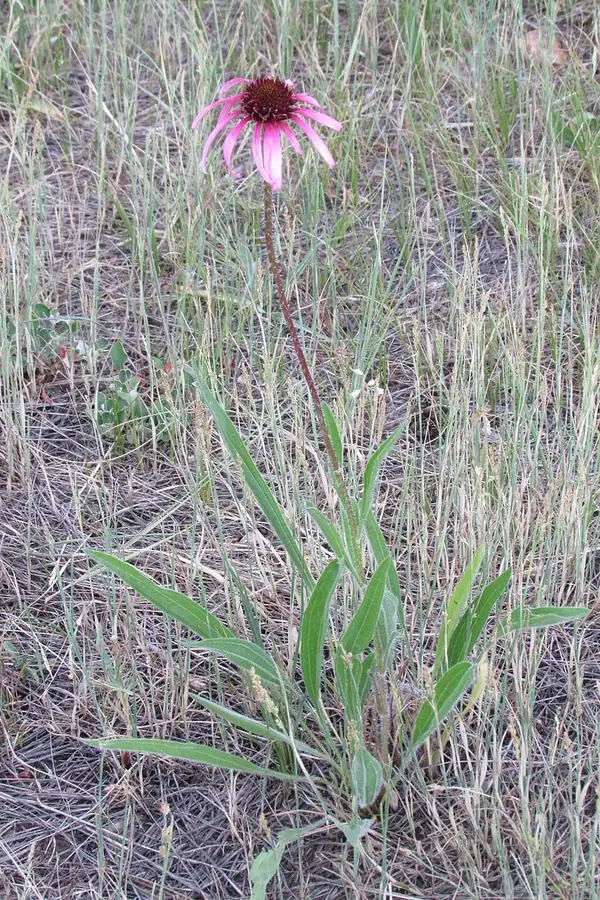
Illustration: Chris Light · CC BY-SA 4.0. View the original image and its licence. Image resized and converted to WebP.
A TOUCH OF SOLÉA
Myriam’s tip
Myriam is reviewing the tip for this profile.
Myriam