BOTANICAL IDENTITY
The right name is the first step.
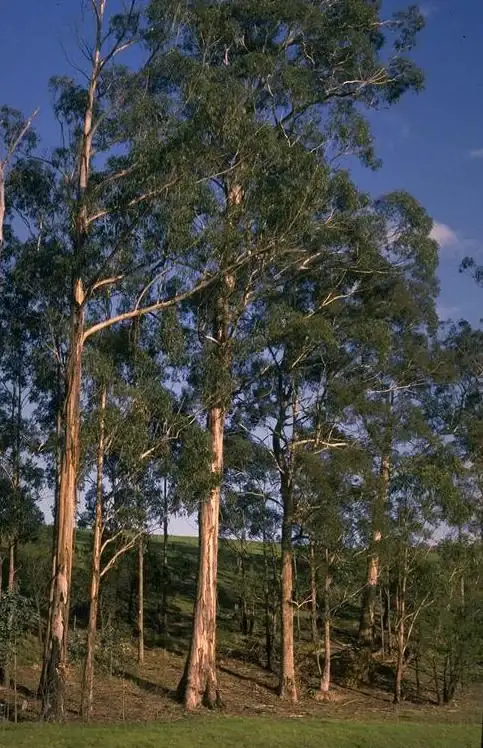
Also known as: blue gum
The botanical name, part and preparation must match. A photograph is not enough for identification intended for consumption.
An illustration is not enough to identify a plant for consumption. Do not forage for a species based solely on this profile.
01 · UNDERSTAND
Properties & uses.
Cough associated with a cold
Traditional use of the leaf; does not treat respiratory distress.
Read the sourceThe traditional uses described are not clinical proof of effectiveness. Evidence for one preparation cannot automatically be applied to another.
02 · UNDERSTAND THE ACTION
How does the plant act?
This profile concerns Eucalyptus globulus leaf for cough associated with the common cold. Much respiratory research focuses on essential oil or isolated cineole. These data are useful for understanding proposed actions, but their transfer to a water-based leaf preparation is limited. The leaf, the oil and a capsule of an isolated substance are not the same product.
Constituents to know.
Their presence and quantity depend on the plant part and preparation.
- 1,8-cineole, or eucalyptol
- A major constituent of the oil, it has been studied separately. Its presence in a plant does not guarantee comparable exposure across different preparations.Read the reference
Cough associated with a cold
Use of the leaf remains traditional; it does not demonstrate treatment of complicated bronchitis or breathing difficulties.
Read the referenceRespiratory tract: avenues involving cineole
The addendum examines studies suggesting anti-inflammatory, expectorant or bronchodilator activities of cineole. They do not prove the same effect for a herbal tea.
Read the referenceWhat this means for preparation.
Read the part and form before any scientific comparison. Never replace an aqueous leaf preparation with drops of essential oil.
03 · EXAMINE THE EVIDENCE
What the research shows.
A laboratory or animal result alone does not demonstrate a benefit in humans. Each result must be read alongside the preparation studied and its limitations.
Read studies at the right scale
- Type of research
- EMA addendum analyzing new data on the leaf and its constituents.
- Preparation concerned
- Particularly eucalyptus oil and cineole, with various routes and formulations.
- Observed results
- Respiratory mechanisms and possible interactions are discussed.
- Limitations to consider
- The clinical relevance of certain interactions still requires study; extrapolation to the leaf cannot be automatic.
What can we take from this?
The effects of cineole validate neither self-medication for asthma nor home ingestion of oil. Age restrictions and preparation-specific precautions remain essential.
Documentary review dated 09/10/2026. The references remain available to check the context.
04 · CHOOSE A PREPARATION
One plant, several preparations.
Only forms documented in this profile’s sources are presented.
Aqueous leaf preparationLeaves · Route: oral
Identified product for respiratory use, according to its leaflet.
Please note: Avoid any substitution with an essential oil.
Read the source05 · BEFORE ANY USE
Precautions & contraindications.
This guidance does not cover every individual situation. Missing information is not a guarantee of safety.
Contraindications
- Supplements: ulcer or digestive inflammation.
Medicine interactions
- Interactions are not detailed here: have a pharmacist check treatments and the preparation.
Adverse effects
- This entry does not provide an exhaustive list of adverse effects.
Pregnancy & breastfeeding
Medicinal use is not recommended during pregnancy and breastfeeding due to insufficient data.
Children & adolescents
Leaves: contraindicated under 30 months; aqueous preparations not recommended under 12 years, hydroalcoholic preparations under 18 years (ANSES).
If symptoms persist, worsen or are unusual, consult a healthcare professional. In an emergency, contact the emergency services.
06 · PUTTING KNOWLEDGE INTO PRACTICE
Preparations & recipes.
No home recipe is provided in this profile. For an appropriate preparation, refer to the product leaflet and ask your pharmacist for advice.
07 · CHECK THE SOURCES
Sources for this profile.
- EMA — Eucalypti folium: official dossierAccessed on 09/10/2026
- ANSES — precautions for plants in food supplements, June 2023 summaryAccessed on 09/10/2026
- EMA — addendum to the assessment report on Eucalyptus globulus Labill. (Leaves)Accessed on 09/10/2026
Illustration: Ian Brooker and David Kleinig · CC BY 3.0 au. View the original image and its licence. Image resized and converted to WebP.
A TOUCH OF SOLÉA
Myriam’s tip
Myriam is reviewing the tip for this profile.
Myriam