BOTANICAL IDENTITY
The right name is the first step.
Also known as: Siberian ginseng
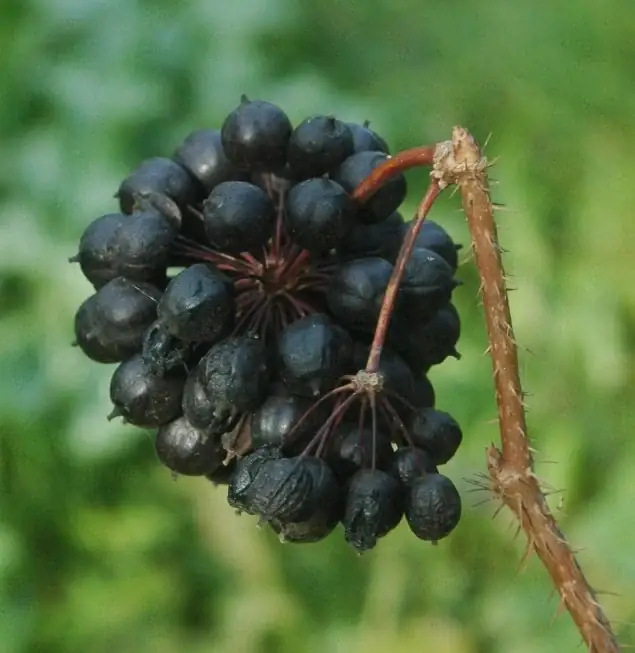
The botanical name, part and preparation must match. A photograph is not enough for identification intended for consumption.
An illustration is not enough to identify a plant for consumption. Do not forage for a species based solely on this profile.
01 · UNDERSTAND
Properties & uses.
Fatigue and weakness
Traditional use for asthenia; investigate the cause of persistent fatigue.
Read the sourceThe traditional uses described are not clinical proof of effectiveness. Evidence for one preparation cannot automatically be applied to another.
02 · UNDERSTAND THE ACTION
How does the plant act?
Eleuthero root is traditionally used for fatigue and weakness. The word “adaptogen” brings together a variety of hypotheses and historical uses; it does not in itself constitute a measurable clinical outcome. A placebo-controlled trial in chronic fatigue did not demonstrate overall efficacy. This plant, sometimes called Siberian ginseng, is not a Panax.
Temporary fatigue
The recognized European use is traditional. A sense of renewed energy does not allow a conclusion that a medical cause of asthenia has been corrected.
Read the referenceChronic fatigue: negative overall result
One trial observed improvement in both groups, without a significant overall difference between eleutherococcus and placebo.
Read the referenceWhat this means for preparation.
Comparing the exact preparation and indication studied is more useful than the word “adaptogen”. Insomnia or palpitations are effects to consider, not proof of restored vitality.
03 · EXAMINE THE EVIDENCE
What the research shows.
A laboratory or animal result alone does not demonstrate a benefit in humans. Each result must be read alongside the preparation studied and its limitations.
Trial by Hartz and colleagues
- Type of research
- Randomized controlled trial, 96 people; two-month data available for 76.
- Preparation concerned
- Siberian ginseng preparation; the abstract does not describe the extract in enough detail to reproduce it.
- Observed results
- Overall efficacy was not demonstrated.
- Limitations to consider
- Subgroup analyses, unadjusted for multiple comparisons, remain exploratory and do not overturn the main result.
What can we take from this?
No general protection against stress, viruses, chemotherapy or pollution is inferred from historical uses. Persistent fatigue warrants assessment; results for Panax ginseng are not transferred.
Documentary review dated 09/10/2026. The references remain available to check the context.
04 · CHOOSE A PREPARATION
One plant, several preparations.
Only forms documented in this profile’s sources are presented.
Root preparationRoot · Route: oral
Identified, quality-controlled product, according to its package leaflet.
Please note: No personalized course or dosage is proposed here.
Read the source05 · BEFORE ANY USE
Precautions & contraindications.
This guidance does not cover every individual situation. Missing information is not a guarantee of safety.
Contraindications
- Do not use in cases of known allergy to this plant.
Medicine interactions
- No interactions reported in the monograph; have any medicines checked.
Adverse effects
- Possible insomnia, irritability, tachycardia and headaches.
Pregnancy & breastfeeding
Medicinal use is not recommended during pregnancy and breastfeeding due to insufficient data.
Children & adolescents
Not recommended under 12 years of age.
If symptoms persist, worsen or are unusual, consult a healthcare professional. In an emergency, contact the emergency services.
06 · PUTTING KNOWLEDGE INTO PRACTICE
Preparations & recipes.
No home recipe is provided in this profile. For an appropriate preparation, refer to the product leaflet and ask your pharmacist for advice.
07 · CHECK THE SOURCES
Sources for this profile.
- EMA — Eleutherococci radix: official dossierAccessed on 09/10/2026
- EMA — monograph or public statement on Eleutherococcus senticosusAccessed on 09/10/2026
- ANSES — precautions for plants in food supplements, June 2023 summaryAccessed on 09/10/2026
- Hartz et al. — Randomized controlled trial of Siberian ginseng for chronic fatigue, 2004Accessed on 09/10/2026
- EMA — assessment report on Eleutherococcus senticosus (Rupr. et Maxim.) Maxim. (Root)Accessed on 09/10/2026
Illustration: Stanislav Doronenko · CC BY 2.5. View the original image and its licence. Image resized and converted to WebP.
A TOUCH OF SOLÉA
Myriam’s tip
Myriam is reviewing the tip for this profile.
Myriam