Identity & origin
BOTANICAL IDENTITY
The right name is the first step.
The European summary concerns powdered dried aerial parts.
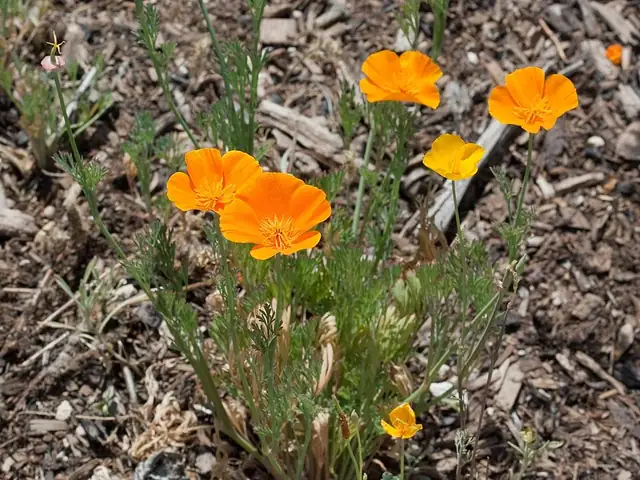
Also known as: California poppy, Eschscholzia californica
The botanical name, part and preparation must match. A photograph is not enough for identification intended for consumption.
An illustration is not enough to identify a plant for consumption. Do not forage for a species based solely on this profile.
Uses & evidence
UNDERSTANDING THE USES
Properties & uses.
Relaxation and sleep
Traditional use for mild stress and to aid sleep; trials are insufficient to assert general efficacy.
Use considered plausible in a traditional-use monograph. That status alone does not demonstrate clinical efficacy.
Read the sourceThe traditional uses described are not clinical proof of effectiveness. Evidence for one preparation cannot automatically be applied to another.
Precautions before use
BEFORE ANY USE
Precautions & contraindications.
This guidance does not cover every individual situation. Missing information is not a guarantee of safety.
Contraindications & precautions
- Source-listed contraindicationKnown allergy to the preparation.Source
- PrecautionMay impair alertness: do not drive if affected.Source
Medicine interactions
- No interaction reported in the sourceNo interactions reported in the monograph for these preparations; compatibility with every medicine is not established.Source
“Reported” does not prove causality; “possible” may reflect indirect evidence. “None reported” means none in the cited source, not that all combinations have been studied. Do not stop a prescribed treatment based on this profile.
Adverse effects
- No adverse effects reported at the time of the EMA assessment; this does not mean zero risk.
Pregnancy & breastfeeding
Not recommended during pregnancy or breastfeeding: insufficient safety data.
SourceChildren & adolescents
Not recommended below 18 because evidence is insufficient.
SourceIf symptoms persist, worsen or are unusual, consult a healthcare professional. In an emergency, contact the emergency services.
Forms & how they are used
DOCUMENTED FORMS
One plant, several preparations.
Only forms documented in this profile’s sources are presented.
Powder in solid dosage formFlowering aerial parts · Route: oral
Powdered aerial parts, in an identified product.
Please note: Follow the package leaflet; no equivalence with a tincture is proposed.
Read the sourceUnderstanding the plant’s actions
EXPLORE THE EVIDENCE
How does the plant act?
California poppy is traditionally documented for mild stress and sleep, using powdered aerial parts. The chemical profile differs between organs: root data must not be used to describe the aerial parts. Identifying several alkaloids is not enough to attribute a specific sedative effect to each or to guarantee a clinical benefit.
Constituents to know.
Their presence and quantity depend on the plant part and preparation.
- Alkaloids of the aerial parts
- Californidine, eschscholzine and protopine appear in the reported analyses. Some substances are much more abundant in the roots; growing conditions also influence results.Read the reference
Mild stress and sleep support
The monograph recognizes a traditional use. It does not demonstrate treatment of chronic insomnia or an anxiety disorder.
Use considered plausible in a traditional-use monograph. That status alone does not demonstrate clinical efficacy.
Read the referenceComposition and preparation
An extract may select certain substances differently from the powder studied historically. The presence of alkaloids therefore does not prove equivalence between these forms.
The references do not establish a benefit. Lack of evidence is not assurance of safety.
Read the referenceWhat this means for preparation.
Check “aerial parts” and powder, then the associated ingredients. A tincture or sedative mixture does not automatically have the dossier of this form.
Studies, findings & limitations
THE RESEARCH
What the research shows.
A laboratory or animal result alone does not demonstrate a benefit in humans. Each result must be read alongside the preparation studied and its limitations.
Chemistry that varies with the plant part
The references do not establish a benefit. Lack of evidence is not assurance of safety.
- Type of research
- EMA report analysing phytochemical studies.
- Preparation concerned
- Aerial parts of Eschscholzia californica, distinguished from roots and experimental cultures.
- Observed results
- The studies identify several alkaloids and variations in profile.
- Limitations to consider
- An analysis under controlled cultivation does not necessarily reflect a plant grown differently; composition does not measure improvement in sleep.
What can we take from this?
No single receptor mechanism is presented as established in humans. If drowsiness occurs, driving is inappropriate; increasing exposure is not an answer to persistently disrupted sleep.
Documentary review dated 09/10/2026. The references remain available to check the context.
Sources & last review
CHECKING REFERENCES
Sources for this profile.
- EMA — Eschscholziae herba: official dossierAccessed on 09/10/2026
- ANSES — precautions for plants in food supplements, June 2023 summaryAccessed on 09/10/2026
- EMA — assessment report on Eschscholzia californica Cham. (Flowering aerial parts)Accessed on 09/10/2026
- EMA — réévaluation documentaire de la préparationAccessed on 09/10/2026
Image: Kaldari · CC0. View the original image and its licence. Image resized and converted to WebP.