BOTANICAL IDENTITY
The right name is the first step.
Also known as: No synonyms listed.
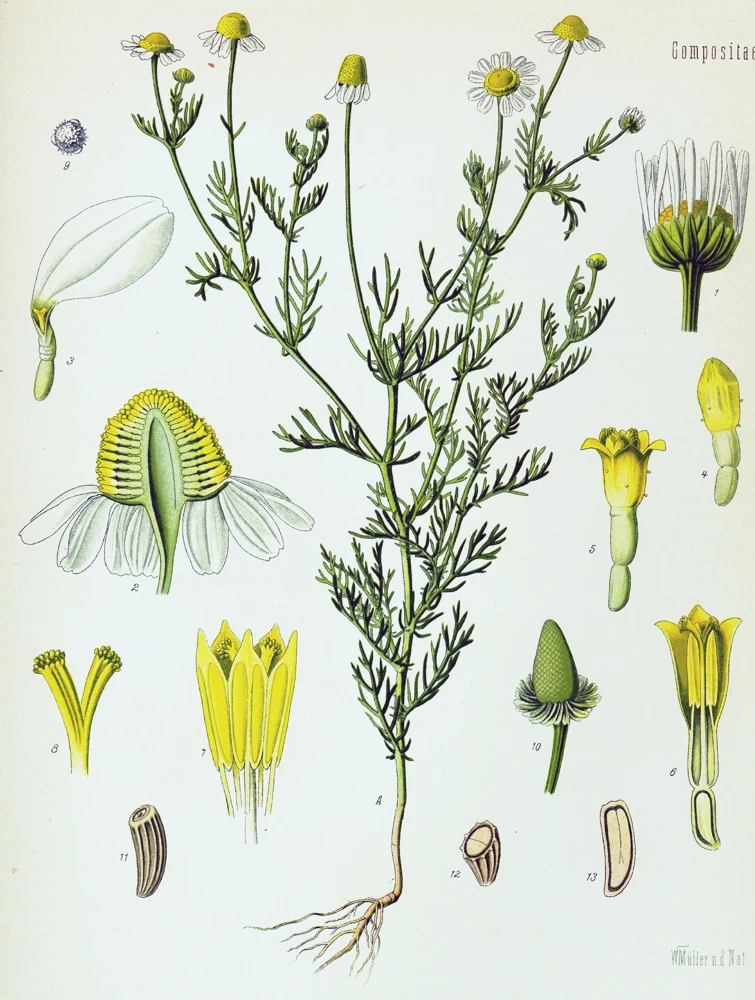
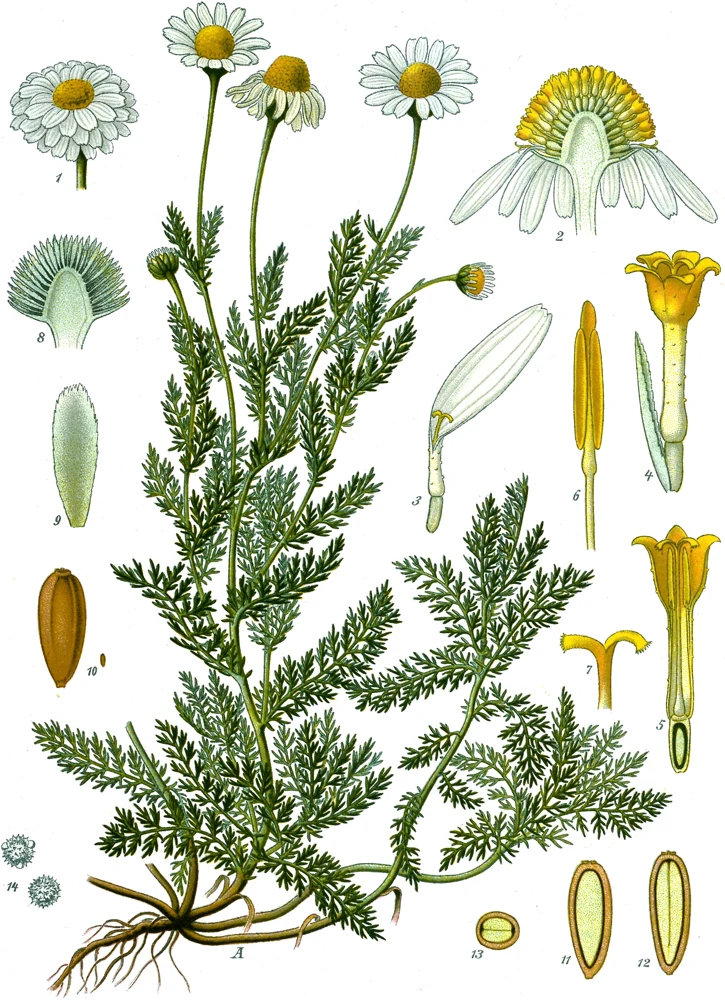
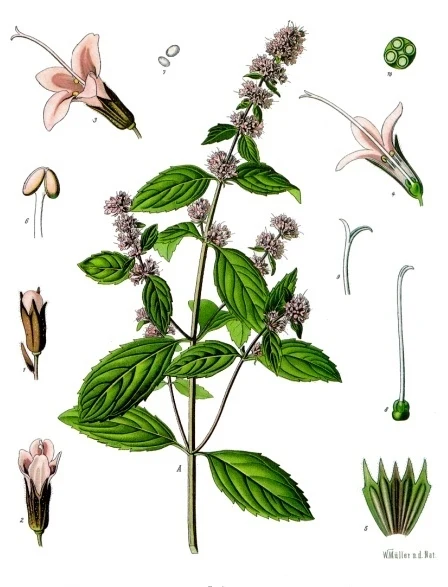
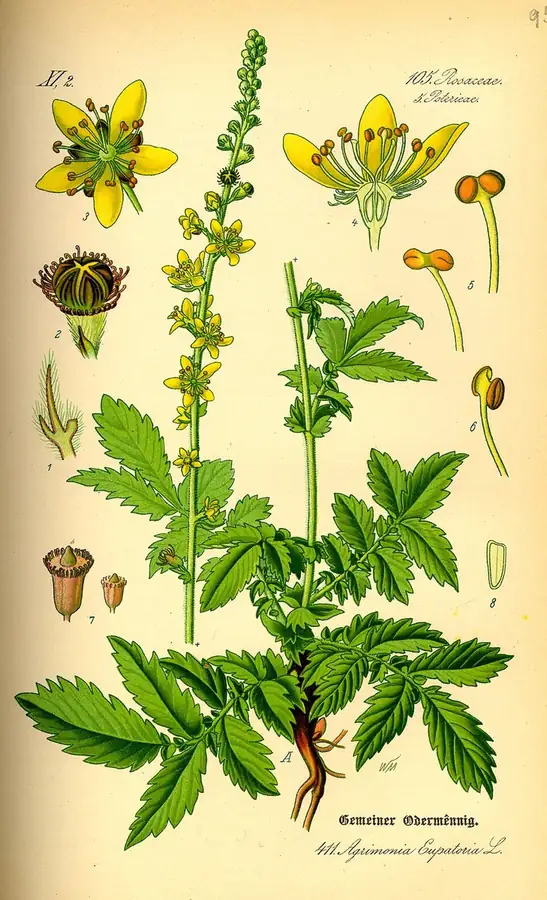
The botanical name, part and preparation must match. A photograph is not enough for identification intended for consumption.
An illustration is not enough to identify a plant for consumption. Do not forage for a species based solely on this profile.
01 · UNDERSTAND
Properties & uses.
Mild diarrhea
Traditional oral use; seek medical advice if it persists for more than three days.
Read the sourceMouth and skin
Traditional local use for minor inflammation of the mouth or skin and superficial wounds.
Read the sourceThe traditional uses described are not clinical proof of effectiveness. Evidence for one preparation cannot automatically be applied to another.
02 · UNDERSTAND THE ACTION
How does the plant act?
The flowering tops are traditionally used in three distinct situations: mild diarrhea, minor inflammation of the mouth or throat, and care of superficial skin lesions. This consistency of use does not amount to three clinically demonstrated benefits. The high tannin content provides a hypothesis, while human data remain limited and preparations vary according to the route of administration.
Constituents to know.
Their presence and quantity depend on the plant part and preparation.
- Tannins and flavonoids
- Tannins, including proanthocyanidins and ellagitannins, characterize the plant. Some flavonoids also serve as identification markers; a marker is not necessarily responsible for the effect.Read the reference
Mouth and throat
Gargling is a traditional local use for minor irritation. It does not establish antibiotic activity in humans.
Read the referenceTannin-related hypothesis
Their contribution is plausible, but the report highlights the lack of evidence attributing agrimony's therapeutic activity in humans to tannins.
Read the referenceExperimental inflammation
The addendum describes effects of extracts in animal models of edema or pain; they do not justify recommending the plant for an inflammatory disease.
Read the referenceWhat this means for preparation.
Choose a form explicitly intended for the mouth, skin or oral use. These routes cannot be substituted for one another, even when they use the same flowering tops.
03 · EXAMINE THE EVIDENCE
What the research shows.
A laboratory or animal result alone does not demonstrate a benefit in humans. Each result must be read alongside the preparation studied and its limitations.
Research update
- Type of research
- EMA addendum examining data published from 2015 to 2022.
- Preparation concerned
- Infusion and experimental fractions of flowering tops.
- Observed results
- Cell and animal studies explore inflammation and antibacterial activity.
- Limitations to consider
- The solvents, concentrations and models differ from human use; no equivalence with anti-infective treatment follows from them.
What can we take from this?
The small historical human study is insufficient for well-established use. Persistent or bloody diarrhea, or diarrhea accompanied by dehydration, falls outside the scope of this traditional use.
Documentary review dated 09/10/2026. The references remain available to check the context.
04 · CHOOSE A PREPARATION
One plant, several preparations.
Only forms documented in this profile’s sources are presented.
InfusionFlowering tops · Route: oral
Dried, cut plant material.
Please note: Check the preparation and its leaflet; concentrations are not interchangeable.
Read the sourceGargle or topical preparationFlowering tops · Route: oromucosal / topical
Preparation intended for the indicated route.
Please note: Do not use a preparation that is not intended for this route.
Read the source05 · BEFORE ANY USE
Precautions & contraindications.
This guidance does not cover every individual situation. Missing information is not a guarantee of safety.
Contraindications
- Do not use in cases of known allergy to this plant.
Medicine interactions
- Interactions are not detailed here: have a pharmacist check treatments and the preparation.
Adverse effects
- No effects reported at the time of the EMA assessment; this does not guarantee absence of risk.
Pregnancy & breastfeeding
Medicinal use is not recommended during pregnancy and breastfeeding due to insufficient data.
Children & adolescents
Under 12 years: use is not recommended.
If symptoms persist, worsen or are unusual, consult a healthcare professional. In an emergency, contact the emergency services.
06 · PUTTING KNOWLEDGE INTO PRACTICE
Preparations & recipes.
A DOCUMENTED PREPARATION
Agrimony infusion — mild diarrhoea
Traditional use for mild, short-lived diarrhoea. Clinical evidence is insufficient to establish efficacy; this tea does not replace rehydration.
Plant part: Dried, fragmented flowering tops
Ingredients & quantities
- 1.5–4 g quality-controlled, dried flowering tops of Agrimonia eupatoria L.
- 250 ml boiling drinking water
Preparation steps
- Weigh the herb and pour the 250 ml boiling water over it.
- Steep for 5–15 minutes: the EMA glossary’s general method where the monograph gives no duration. Follow the product leaflet first.
- Strain carefully and allow to cool to a comfortable temperature before use.
Use: Adults aged 18+. EMA reference: 1 preparation, 2–3 times daily. Seek advice if diarrhoea lasts over 3 days, worsens, recurs or contains blood. Seek advice sooner for fever, significant pain or dehydration signs.
Storage: Prepare immediately before use. The monograph establishes no storage period for this water-based preparation; do not make a stock batch.
Before you start. Avoid with agrimony allergy. Medicinal use is not recommended during pregnancy or breastfeeding because data are insufficient. Do not combine astringent herbs to intensify the effect. The monograph reports no interactions, which does not guarantee their absence; ask a pharmacist to check medicines.
A DOCUMENTED PREPARATION
Agrimony mouth rinse
Traditional local use for minor mouth inflammation. Clinical evidence is insufficient to promise healing or replace dental care.
Plant part: Dried, fragmented flowering tops
Ingredients & quantities
- 1.5 g quality-controlled, dried Agrimonia eupatoria L. flowering tops
- 150 ml boiling drinking water
Preparation steps
- Pour the 150 ml boiling water over the weighed herb.
- Steep for 5–15 minutes: the EMA glossary’s general method where the monograph gives no duration. Follow the product leaflet first.
- Strain carefully and allow to cool to a comfortable temperature before use.
- Rinse the mouth, or gargle only if able to do so safely, then spit out.
Use: Adults aged 18+. EMA reference: 2–4 uses daily. The monograph gives no contact time. Seek advice if symptoms worsen or last over one week.
Storage: Prepare immediately before use. The monograph establishes no storage period for this water-based preparation; do not make a stock batch.
Before you start. Do not swallow. Avoid with agrimony allergy. Medicinal use is not recommended during pregnancy or breastfeeding because data are insufficient. Toothache, swelling or difficulty swallowing need advice; this rinse does not treat an abscess.
A DOCUMENTED PREPARATION
Agrimony compress for intact skin
Traditional use for minor skin inflammation. This collection limits the non-sterile preparation to intact skin, although the monograph also mentions small wounds.
Plant part: Dried, fragmented flowering tops
Ingredients & quantities
- 3–10 g quality-controlled, dried Agrimonia eupatoria L. flowering tops
- 250 ml cold drinking water
- A clean, single-use compress
Preparation steps
- Place the weighed herb in the 250 ml cold water.
- Bring to the boil, then simmer for 15–30 minutes: the EMA glossary’s general method, as the monograph gives no preparation-specific time. Follow the leaflet first.
- Strain carefully and allow to cool to a comfortable temperature before use.
- Soak the compress and apply it to the small affected area of intact skin.
Use: Adults aged 18+. The monograph gives neither frequency nor contact time for dressings: have a pharmacist specify them for the chosen product. Seek advice if symptoms worsen or last over one week.
Storage: Prepare immediately before use. The monograph establishes no storage period for this water-based preparation; do not make a stock batch.
Before you start. Do not apply to wounds, infected skin, major burns or near the eyes. Avoid with agrimony allergy; stop if the skin reacts. Medicinal use is not recommended during pregnancy or breastfeeding because data are insufficient.
07 · CHECK THE SOURCES
Sources for this profile.
- EMA — Agrimoniae herba: official dossierAccessed on 09/10/2026
- ANSES — precautions for plants in food supplements, June 2023 summaryAccessed on 09/10/2026
- EMA — assessment report on Agrimonia eupatoria L. (Flowering tops)Accessed on 09/10/2026
- EMA — addendum to the assessment report on Agrimonia eupatoria L. (Flowering tops)Accessed on 09/10/2026
- EMA — Monograph on Agrimonia eupatoria L., herbaAccessed on 09/10/2026
- EMA — Glossary on herbal teas, general method (§4)Accessed on 09/10/2026
Illustration: Flora von Deutschland, Österreich und der Schweiz — Otto Wilhelm Thomé (1885), via Wikimedia Commons · Public domain. View the original image and its licence. Image resized and converted to WebP.
A TOUCH OF SOLÉA
Myriam’s tip
Myriam is reviewing the tip for this profile.
Myriam