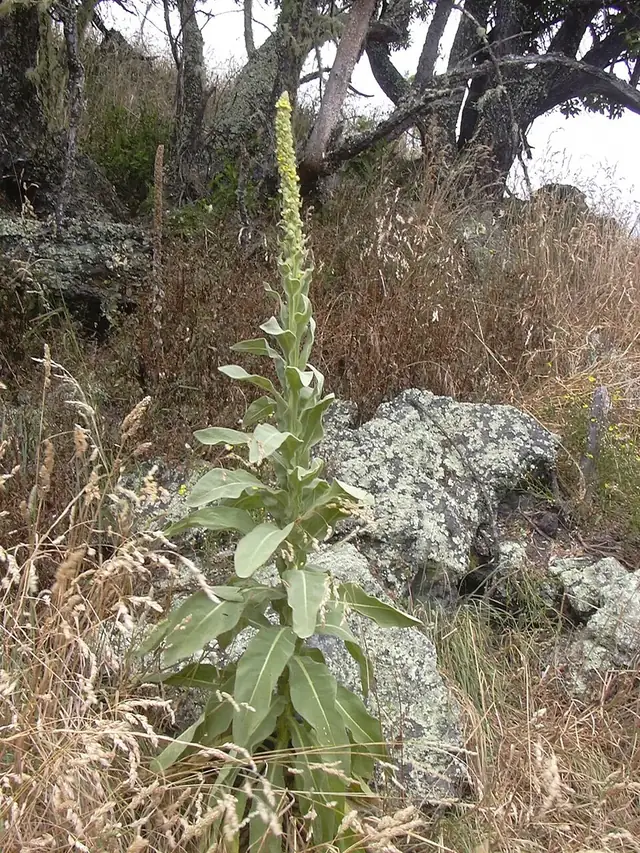
BOTANICAL IDENTITY
The right name is the first step.
Also known as: mullein
The dossier includes V. thapsus, V. densiflorum and V. phlomoides.
An illustration is not enough to identify a plant for consumption. Do not forage for a species based solely on this profile.
01 · UNDERSTAND
Properties & uses.
Throat and dry cough
Traditional relief of symptoms of an irritated throat associated with a dry cough and a cold.
Read the sourceThe traditional uses described are not clinical proof of effectiveness. Evidence for one preparation cannot automatically be applied to another.
02 · UNDERSTAND THE ACTION
How does the plant act?
Mullein here is Verbascum thapsus, and the documented part is the flower, mainly its corolla and stamens. The European monograph is shared by three Verbascum species. It recognizes traditional use for throat irritation accompanied by a dry cough and a cold. The dossier does not allow this symptomatic relief to be turned into treatment of the underlying infection or of all coughs.
Constituents to know.
Their presence and quantity depend on the plant part and preparation.
- Mucilages and associated compounds
- The shared dossier describes constituents that make a soothing action plausible; no single therapeutically active constituent has been established.Read the reference
- Iridoids
- The profile differs between the species studied. Amounts measured in V. densiflorum or V. phlomoides must not be attributed to V. thapsus.Read the reference
Local throat soothing
The water-based flower preparation belongs to a soothing tradition; the extent of benefit is not quantified by robust human trials.
Read the referenceWhat this means for preparation.
A raw material must state the species and the part “flower”. The name “mullein” can refer to several species; it is insufficient identification for preparing a self-harvested plant.
03 · EXAMINE THE EVIDENCE
What the research shows.
A laboratory or animal result alone does not demonstrate a benefit in humans. Each result must be read alongside the preparation studied and its limitations.
One shared monograph, not three separate trials
- Type of research
- EMA assessment of the flowers of V. thapsus, V. densiflorum and V. phlomoides.
- Preparation concerned
- Dried and fragmented flowers; many publications do not specify the species.
- Observed results
- Long-standing use supports a traditional indication for an irritated throat and dry cough.
- Limitations to consider
- Lack of adequate clinical trials; composition sometimes documented for another species in the group, and data cannot be extrapolated to the leaf.
What can we take from this?
Properties attributed to the leaves or root are not those assessed here. A cough with shortness of breath, high fever or unusual sputum falls outside the scope of simple temporary irritation.
Documentary review dated 09/10/2026. The references remain available to check the context.
04 · CHOOSE A PREPARATION
One plant, several preparations.
Only forms documented in this profile’s sources are presented.
InfusionFlower · Route: oral
Whole or fragmented flowers.
Please note: Follow the preparation instructions specific to the product.
Read the source05 · BEFORE ANY USE
Precautions & contraindications.
This guidance does not cover every individual situation. Missing information is not a guarantee of safety.
Contraindications
- Allergy to the plant.
Medicine interactions
- None reported in the monograph; check medications.
Adverse effects
- No known effects in the monograph; absence of a signal does not mean absence of risk.
Pregnancy & breastfeeding
Pregnancy and breastfeeding: medicinal use is not recommended due to insufficient data.
Children & adolescents
Not recommended under 12 years of age.
If symptoms persist, worsen or are unusual, consult a healthcare professional. In an emergency, contact the emergency services.
06 · PUTTING KNOWLEDGE INTO PRACTICE
Preparations & recipes.
A DOCUMENTED PREPARATION
Mullein flower infusion
Reference for sore throat associated with a cold and dry cough. Traditional use; robust clinical trials have not established this preparation’s efficacy.
Plant part: Dried flowers
Ingredients & quantities
- 1.5–2 g dried Verbascum thapsus L. flowers, supplied for herbal tea
- 150 ml boiling drinking water
Preparation steps
- Weigh the identified, dried, cut plant part supplied for this use.
- Pour 150 ml boiling drinking water over the herb.
- Steep for 5–15 minutes: the EMA glossary’s general reference, as the monograph gives no specific duration. Follow the product leaflet first.
- Strain and allow to cool to a comfortable temperature before use.
Use: For adults aged 18+ in this collection. One preparation per dose, 3–4 times daily, giving 4.5–8 g flowers daily. Seek advice if symptoms last over one week, worsen, or if fever, breathing difficulty or purulent sputum develops.
Storage: Prepare immediately before use. No storage period is established here; do not make a stock batch (EMA glossary, §4).
Before you start. Contraindicated with mullein allergy. Strain carefully. Do not replace the flowers with leaves or an unidentified mullein species. Use is not recommended during pregnancy or breastfeeding because data are insufficient.
07 · CHECK THE SOURCES
Sources for this profile.
- EMA — Verbasci flos: dossier and documentsAccessed on 09/10/2026
- EMA — Verbascum thapsus L., V. densiflorum Bertol. et V. phlomoides L., flos: monograph, preparation and precautionsAccessed on 09/10/2026
- EMA — scientific assessment report: Verbascum thapsusAccessed on 09/10/2026
- EMA — Glossary on herbal teas: general preparation method, §4Accessed on 09/10/2026
Illustration: Forest & Kim Starr · CC BY 3.0. View the original image and its licence. Image resized and converted to WebP.
A TOUCH OF SOLÉA
Myriam’s tip
Myriam is reviewing the tip for this profile.
Myriam