Identity & origin
BOTANICAL IDENTITY
The right name is the first step.
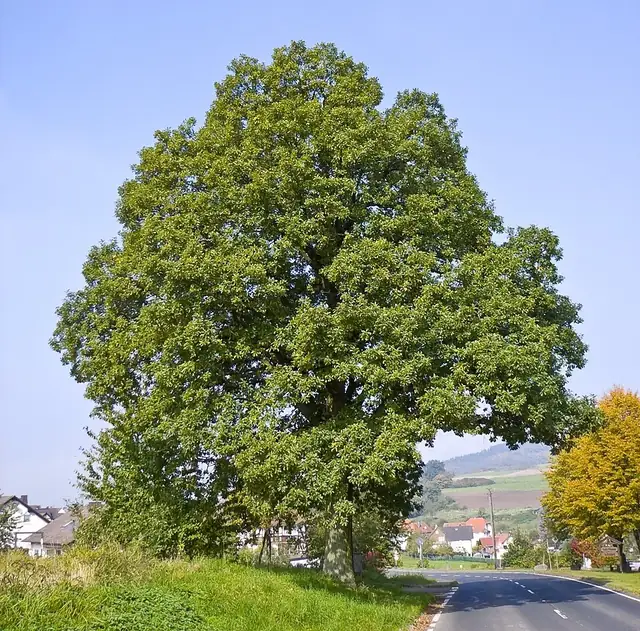
The shared monograph “quercus cortex” includes Quercus petraea (Matt.) Liebl. This profile is limited to the parts and preparations described there.
Inclusion in a collective monograph does not prove that each species has been studied separately in humans. The form and pharmaceutical quality described remain decisive.
Also known as: Sessile oak
A common name and photograph do not guarantee identification. Check the botanical name and part indicated on a traceable product.
An illustration is not enough to identify a plant for consumption. Do not forage for a species based solely on this profile.
Uses & evidence
UNDERSTANDING THE USES
Properties & uses.
Mild diarrhea
Traditional oral use of bark for mild diarrhoea; no separate species-specific efficacy or proven anti-infective action.
Use considered plausible in a traditional-use monograph. That status alone does not demonstrate clinical efficacy.
Read the sourceMinor skin or mouth irritations
Traditional local use of bark preparations for minor mouth or skin inflammation. Oral use is not interchangeable.
Use considered plausible in a traditional-use monograph. That status alone does not demonstrate clinical efficacy.
Read the sourceThe traditional uses described are not clinical proof of effectiveness. Evidence for one preparation cannot automatically be applied to another.
Precautions before use
BEFORE ANY USE
Precautions & contraindications.
This guidance does not cover every individual situation. Missing information is not a guarantee of safety.
Contraindications & precautions
- Source-listed contraindicationKnown allergy to the preparation.Source
- Source-listed contraindicationBaths: open wounds, extensive lesions or infection of skin or mucosa.Source
- PrecautionAvoid hot baths with fever/infection, heart failure or hypertension.Source
Medicine interactions
- Possible interactionOral use may delay medicine absorption: separate by at least one hour.Source
“Reported” does not prove causality; “possible” may reflect indirect evidence. “None reported” means none in the cited source, not that all combinations have been studied. Do not stop a prescribed treatment based on this profile.
Adverse effects
- Stop use if an unexpected reaction occurs; limited data do not mean absence of risk.
Pregnancy & breastfeeding
Not recommended during pregnancy or breastfeeding: insufficient safety data.
SourceChildren & adolescents
Not recommended below 18 because evidence is insufficient.
SourceIf symptoms persist, worsen or are unusual, consult a healthcare professional. In an emergency, contact the emergency services.
Forms & how they are used
DOCUMENTED FORMS
One plant, several preparations.
Only forms documented in this profile’s sources are presented.
DecoctionBark · Route: oral
Preparation described in the shared monograph.
Please note: Follow the product's package leaflet; concentrations are not interchangeable.
Read the sourceLocal preparationBark · Route: topical or oromucosal
Preparation described in the shared monograph.
Please note: Do not apply to an extensive lesion; do not swallow a mouthwash.
Read the sourceUnderstanding the plant’s actions
EXPLORE THE EVIDENCE
How does the plant act?
The bark, not the acorn or leaf, is the medicinal part in this profile. In Q. petraea, the report distinguishes several tannin families, including proanthocyanidins: not all tannins have the same astringency.
Constituents to know.
Their presence and quantity depend on the plant part and preparation.
- Tannins
- Their ability to bind to proteins provides a plausible explanation of local astringency; this is not sufficient clinical evidence.Read the reference
Local astringent action
The traditional-use framework includes mild diarrhea and minor irritation of the mouth or skin, depending on the preparation and route.
Use considered plausible in a traditional-use monograph. That status alone does not demonstrate clinical efficacy.
Read the referenceWhat this means for preparation.
To interpret a study, first check “cortex”, the species, then the route: rinsing the mouth and drinking a preparation produce different exposure.
Studies, findings & limitations
THE RESEARCH
What the research shows.
A laboratory or animal result alone does not demonstrate a benefit in humans. Each result must be read alongside the preparation studied and its limitations.
Scope of the evidence on oaks
The references do not establish a benefit. Lack of evidence is not assurance of safety.
- Type of research
- Shared EMA assessment
- Preparation concerned
- Bark from accepted species; heterogeneous experimental data.
- Observed results
- The assessment recognises pharmacological plausibility and a tradition of use.
- Limitations to consider
- No isolated trial of this species is presented here. A study on another species or on root bark is insufficient to characterize the product in this profile.
What can we take from this?
Astringent does not mean proven disinfectant. Oak does not treat all causes of diarrhea and does not remove the need to investigate its cause if it persists.
Documentary review dated 09/10/2026. The references remain available to check the context.
Sources & last review
CHECKING REFERENCES
Sources for this profile.
- EMA — quercus cortexAccessed on 09/10/2026
- EMA — final shared assessment of oak barksAccessed on 09/10/2026
- EMA — réévaluation documentaire de la préparationAccessed on 09/10/2026
Image: Willow · CC BY 2.5. View the original image and its licence. Image resized and converted to WebP.