BOTANICAL IDENTITY
The right name is the first step.
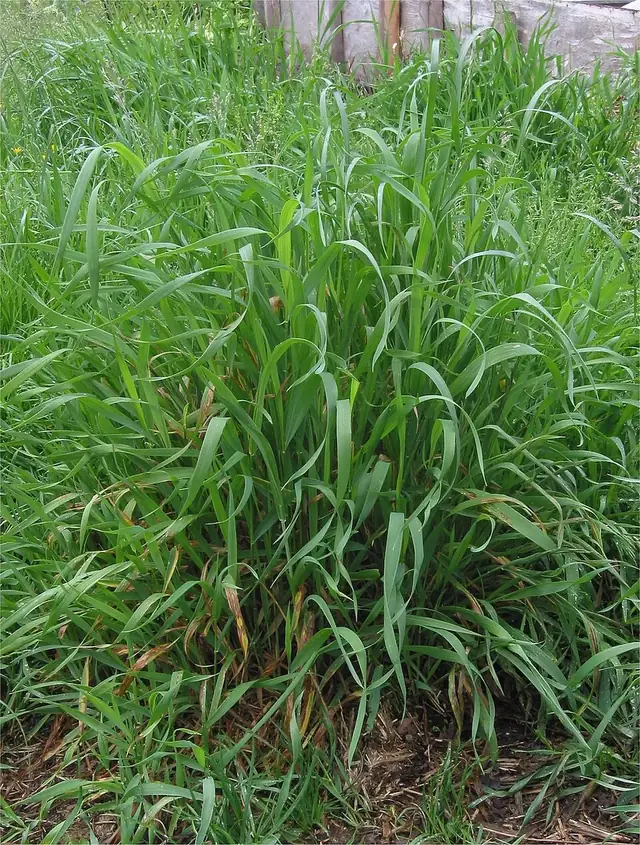
Also known as: Elymus repens, Agropyron repens
The botanical name, part and preparation must match. A photograph is not enough for identification intended for consumption.
An illustration is not enough to identify a plant for consumption. Do not forage for a species based solely on this profile.
01 · UNDERSTAND
Properties & uses.
Urinary elimination
Traditional adjunctive use to increase urine volume in minor complaints; does not treat an infection on its own.
Read the sourceThe traditional uses described are not clinical proof of effectiveness. Evidence for one preparation cannot automatically be applied to another.
02 · UNDERSTAND THE ACTION
How does the plant act?
Couch grass rhizome is associated with traditional adjunctive urinary use. However, the word “diuretic” requires precision: the revision report does not clearly confirm this effect for infusions or decoctions through convincing experiments. Another avenue, bacterial adhesion to urinary cells, has been studied using fractions very different from a herbal tea.
Constituents to know.
Their presence and quantity depend on the plant part and preparation.
- Fructans and phenolic esters
- The rhizome contains, among other compounds, triticin and coumaric acid esters. The report identifies no constituent with demonstrated therapeutic activity.Read the reference
Adjunctive urinary use
The monograph recognizes increased urination to support minor complaints on the basis of longstanding use, without evidence of treating an infection.
Read the referenceBacterial adhesion
Activity against E. coli adhesion was observed with an acetone-extracted fraction; more hydrophilic fractions were inactive in this experiment.
Read the referenceWhat this means for preparation.
A finding obtained with an isolated fraction does not justify describing an infusion as antibacterial. The distinctions between rhizome and leaves, and herbal tea and extract, remain essential.
03 · EXAMINE THE EVIDENCE
What the research shows.
A laboratory or animal result alone does not demonstrate a benefit in humans. Each result must be read alongside the preparation studied and its limitations.
Observations in patients
- Type of research
- EMA assessment of open-label studies and post-marketing surveillance.
- Preparation concerned
- Liquid hydroalcoholic extracts of the rhizome.
- Observed results
- Improvements in urinary symptoms were reported.
- Limitations to consider
- The absence of well-designed, controlled trials prevents these improvements from being attributed to the plant with certainty.
What can we take from this?
The plant is not a proven solution for stones, prostatitis or cystitis. Fluid restriction related to the heart or kidneys makes use aimed at increasing urine output unsuitable.
Documentary review dated 09/10/2026. The references remain available to check the context.
04 · CHOOSE A PREPARATION
One plant, several preparations.
Only forms documented in this profile’s sources are presented.
Infusion or decoctionRhizome · Route: oral
Fragmented dried rhizome.
Please note: Check the preparation and its leaflet; concentrations are not interchangeable.
Read the sourceLiquid extract or tinctureRhizome · Route: oral
Preparations defined in the monograph.
Please note: Hydroalcoholic forms for adults only.
Read the source05 · BEFORE ANY USE
Precautions & contraindications.
This guidance does not cover every individual situation. Missing information is not a guarantee of safety.
Contraindications
- Allergy to the plant.
- Do not undertake a course intended to increase urination if you have fluid restrictions or severe heart/kidney disease.
Medicine interactions
- Interactions are not detailed here: have a pharmacist check treatments and the preparation.
Adverse effects
- This entry does not provide an exhaustive list of adverse effects.
Pregnancy & breastfeeding
Pregnancy and breastfeeding: have the preparation checked; no self-medication is proposed here.
Children & adolescents
Herbal tea: not recommended under 12; liquid extract or tincture: under 18.
If symptoms persist, worsen or are unusual, consult a healthcare professional. In an emergency, contact the emergency services.
06 · PUTTING KNOWLEDGE INTO PRACTICE
Preparations & recipes.
No home recipe is provided in this profile. For an appropriate preparation, refer to the product leaflet and ask your pharmacist for advice.
07 · CHECK THE SOURCES
Sources for this profile.
- EMA — Agropyri repentis rhizoma: official dossierAccessed on 09/10/2026
- EMA — monograph or public statement on Agropyron repensAccessed on 09/10/2026
- EMA — assessment report on Agropyron repens (L.) P. Beauv. (Rhizome)Accessed on 09/10/2026
Illustration: Rasbak · CC BY-SA 3.0. View the original image and its licence. Image resized and converted to WebP.
A TOUCH OF SOLÉA
Myriam’s tip
Myriam is reviewing the tip for this profile.
Myriam