BOTANICAL IDENTITY
The right name is the first step.
Also known as: No synonyms listed.
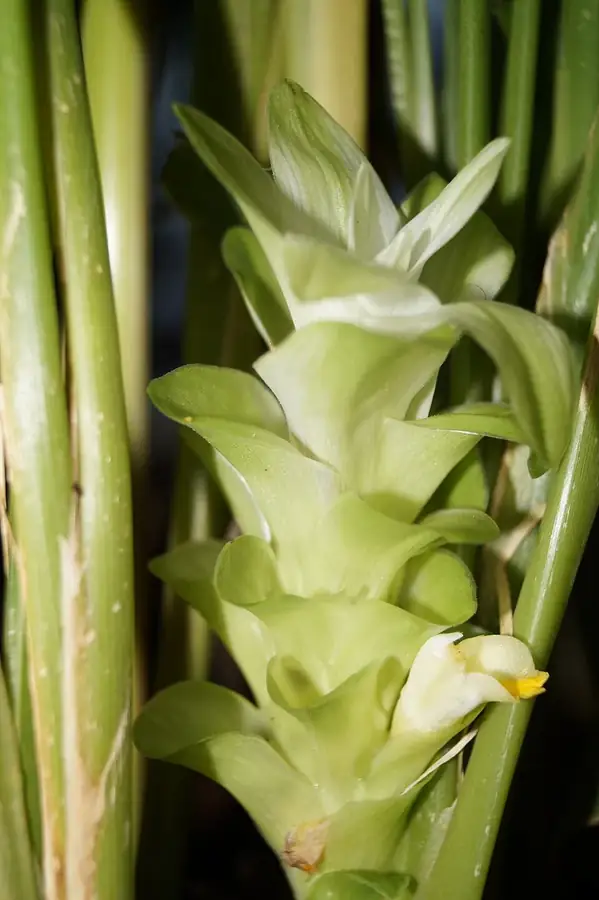
Curcuma longa and Curcuma xanthorrhiza are distinct; check the product's species.
An illustration is not enough to identify a plant for consumption. Do not forage for a species based solely on this profile.
01 · UNDERSTAND
Properties & uses.
Sluggish digestion and bloating
Traditional use for mild digestive discomfort; insufficient evidence to generalize to other diseases.
Read the sourceThe traditional uses described are not clinical proof of effectiveness. Evidence for one preparation cannot automatically be applied to another.
02 · UNDERSTAND THE ACTION
How does the plant act?
Curcuma longa rhizome has documented traditional use for feelings of fullness, sluggish digestion and gas. The many publications on isolated curcumin form a separate body of evidence. A highly enriched capsule or one designed to increase absorption is not equivalent to a rhizome preparation. This distinction explains why claimed benefits and precautions should not be generalized to the entire plant.
Constituents to know.
Their presence and quantity depend on the plant part and preparation.
- Curcumin and curcuminoids
- Curcumin is a constituent studied separately. Its amount in a preparation and its availability depend on the formulation.Read the reference
Digestion
Pharmacological data make traditional digestive use plausible; they do not establish general efficacy against inflammatory diseases.
Read the referenceExploratory biological parameters
Studies have measured lipids or oxidation markers with curcumin. Changing a marker does not demonstrate a reduction in cardiovascular events.
Read the referenceWhat this means for preparation.
Identify the rhizome, enriched extract and any process that increases absorption. These details change the comparison with a study and the safety assessment.
03 · EXAMINE THE EVIDENCE
What the research shows.
A laboratory or animal result alone does not demonstrate a benefit in humans. Each result must be read alongside the preparation studied and its limitations.
Example of very preliminary data
- Type of research
- Small seven-day study in ten healthy volunteers, examined by the EMA.
- Preparation concerned
- Isolated curcumin, not rhizome herbal tea.
- Observed results
- Changes in lipid and oxidative parameters were reported.
- Limitations to consider
- Small sample size, short duration and an isolated substance: these data do not demonstrate a lasting therapeutic benefit from the rhizome.
What can we take from this?
Biliary and liver precautions remain relevant. No anticancer or “detox” benefit is derived from cellular activity or a biomarker.
Documentary review dated 09/10/2026. The references remain available to check the context.
04 · CHOOSE A PREPARATION
One plant, several preparations.
Only forms documented in this profile’s sources are presented.
Herbal teaRhizome · Route: oral
Cut rhizome.
Please note: Check the preparation and its leaflet; concentrations are not interchangeable.
Read the sourceDefined extractRhizome · Route: oral
05 · BEFORE ANY USE
Precautions & contraindications.
This guidance does not cover every individual situation. Missing information is not a guarantee of safety.
Contraindications
- Obstruction or other biliary disorder: do not use without medical assessment.
Medicine interactions
- Interactions are not detailed here: have a pharmacist check treatments and the preparation.
Adverse effects
- Dry mouth, gas and gastric irritation have been reported.
Pregnancy & breastfeeding
Medicinal use is not recommended during pregnancy and breastfeeding due to insufficient data.
Children & adolescents
For adults only.
If symptoms persist, worsen or are unusual, consult a healthcare professional. In an emergency, contact the emergency services.
06 · PUTTING KNOWLEDGE INTO PRACTICE
Preparations & recipes.
No home recipe is provided in this profile. For an appropriate preparation, refer to the product leaflet and ask your pharmacist for advice.
07 · CHECK THE SOURCES
Sources for this profile.
- EMA — Curcumae longae rhizoma: official dossierAccessed on 09/10/2026
- ANSES — precautions for plants in food supplements, June 2023 summaryAccessed on 09/10/2026
- EMA — assessment report on Curcuma longa L. (Rhizome)Accessed on 09/10/2026
Illustration: SKsiddhartthan · CC BY-SA 4.0. View the original image and its licence. Image resized and converted to WebP.
A TOUCH OF SOLÉA
Myriam’s tip
Myriam is reviewing the tip for this profile.
Myriam