BOTANICAL IDENTITY
The right name is the first step.
Also known as: No synonyms listed.
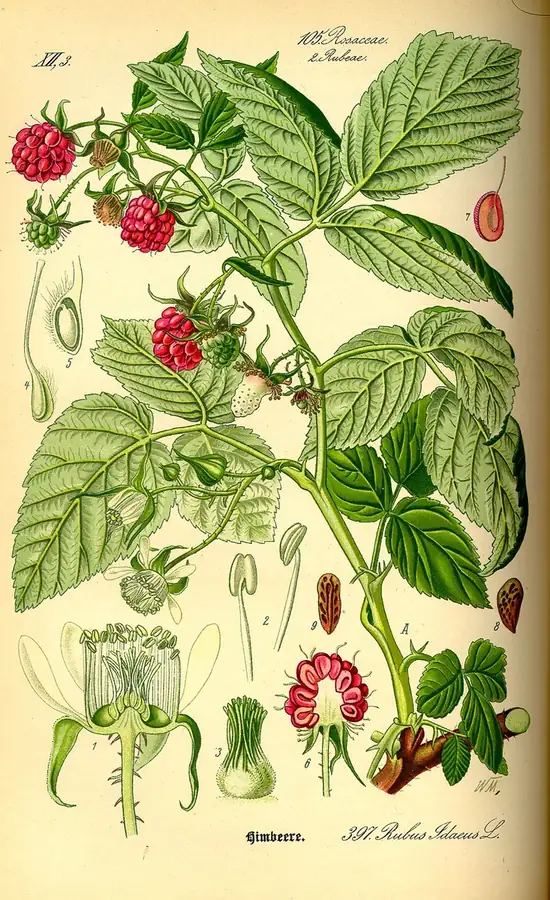
The botanical name and part used must match the profile; a photograph alone is not sufficient grounds for consuming a plant.
An illustration is not enough to identify a plant for consumption. Do not forage for a species based solely on this profile.
01 · UNDERSTAND
Properties & uses.
Mouth and digestion
Traditional uses for minor mouth inflammation and mild diarrhoea.
Read the sourceThe traditional uses described are not clinical proof of effectiveness. Evidence for one preparation cannot automatically be applied to another.
02 · UNDERSTAND THE ACTION
How does the plant act?
Raspberry leaf has three recognized traditional uses: minor menstrual cramps, mild diarrhea and irritation of the mouth and throat. Effects observed on smooth muscle in the laboratory vary, so it cannot be described as a universal regulator of the uterus. The evidence on preparation for childbirth is separate and is insufficient to justify this use during pregnancy.
Constituents to know.
Their presence and quantity depend on the plant part and preparation.
- Polyphenols
- Quercetin derivatives and ellagic, caffeic and chlorogenic acids are described; no single active ingredient responsible for the uses is identified.Read the reference
Minor menstrual spasms
Traditional use in adults, without evidence of a treatment for endometriosis or a general hormonal action.
Read the referenceMucous membranes and mild diarrhea
The leaf can be prepared for oral or local use, according to distinct traditional uses.
Read the referenceWhat this means for preparation.
The fruit is not a substitute for the leaf. For menstrual discomfort, distinguish a familiar minor symptom from pain that is new, intense or accompanied by unusual bleeding.
03 · EXAMINE THE EVIDENCE
What the research shows.
A laboratory or animal result alone does not demonstrate a benefit in humans. Each result must be read alongside the preparation studied and its limitations.
Pregnancy: a cautious conclusion
- Type of research
- EMA report analyzing human studies and experimental toxicology.
- Preparation concerned
- Rubus idaeus leaf preparations, with varying descriptions and durations.
- Observed results
- The small studies do not establish a convincing clinical benefit in facilitating childbirth.
- Limitations to consider
- Group sizes, short exposures and questions about foetal development prevent a conclusion of sufficient safety during pregnancy.
What can we take from this?
The absence of a signal in a small study is not obstetric validation. This profile proposes neither cervical preparation nor induction of labor.
Documentary review dated 09/10/2026. The references remain available to check the context.
04 · CHOOSE A PREPARATION
One plant, several preparations.
Only forms documented in this profile’s sources are presented.
InfusionLeaf · Route: oral
MouthwashLeaf · Route: mouth
Infusion suitable for mucous membranes.
Please note: Seek medical advice if symptoms persist.
Read the source05 · BEFORE ANY USE
Precautions & contraindications.
This guidance does not cover every individual situation. Missing information is not a guarantee of safety.
Contraindications
- Allergy to the preparation.
Medicine interactions
- None reported; do not infer universal compatibility.
Adverse effects
- No signal reported at assessment; limited data.
Pregnancy & breastfeeding
Pregnancy and breastfeeding: medicinal use is not recommended due to insufficient data.
Children & adolescents
Medicinal use for adults only.
If symptoms persist, worsen or are unusual, consult a healthcare professional. In an emergency, contact the emergency services.
06 · PUTTING KNOWLEDGE INTO PRACTICE
Preparations & recipes.
No home recipe is provided in this profile. For an appropriate preparation, refer to the product leaflet and ask your pharmacist for advice.
07 · CHECK THE SOURCES
Sources for this profile.
- EMA — Rubi idaei folium: dossier and documentsAccessed on 09/10/2026
- ANSES — precautions for herbal supplements, June 2023 tableAccessed on 09/10/2026
- EMA — scientific assessment report: Rubus idaeusAccessed on 09/10/2026
Illustration: Flora von Deutschland, Österreich und der Schweiz — Otto Wilhelm Thomé (1885), via Wikimedia Commons · Public domain. View the original image and its licence. Image resized and converted to WebP.
A TOUCH OF SOLÉA
Myriam’s tip
Myriam is reviewing the tip for this profile.
Myriam