BOTANICAL IDENTITY
The right name is the first step.
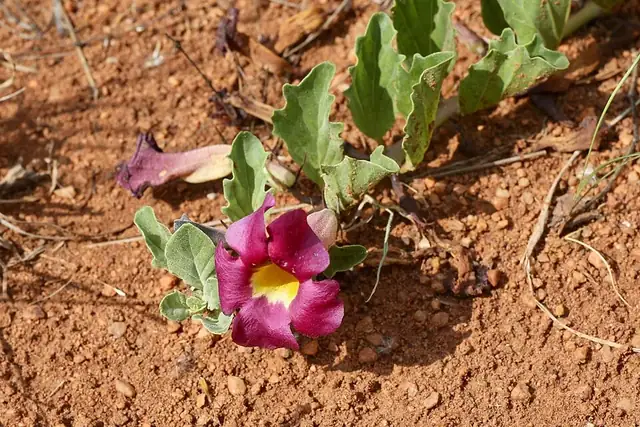
Also known as: Zeyher's devil's claw
A common name and photograph do not guarantee identification. Check the botanical name and part indicated on a traceable product.
An illustration is not enough to identify a plant for consumption. Do not forage for a species based solely on this profile.
01 · UNDERSTAND
Properties & uses.
Minor joint pain
Use of the monographed group; the source does not demonstrate a benefit specific to each species.
Read the sourceBloating and temporary loss of appetite
Use of the monographed group; the source does not demonstrate a benefit specific to each species.
Read the sourceThe traditional uses described are not clinical proof of effectiveness. Evidence for one preparation cannot automatically be applied to another.
02 · UNDERSTAND THE ACTION
How does the plant act?
Harpagophytum zeyheri is accepted in the medicinal group of devil's claw roots, but the most cited studies do not all demonstrate its separate efficacy. Moving from the commercial name “devil's claw” to a scientific statement must therefore specify the species, extract and indication. The joint and digestive uses recognized here remain traditional.
Minor joint pain
The assessment provides plausibility for certain preparations in the group. It does not validate anti-inflammatory action identical to that of a medicine, regardless of species.
Read the referenceDigestive discomfort and appetite
This second traditional use should not be confused with evidence against an inflammatory digestive disease.
Read the referenceWhat this means for preparation.
Prefer documentation that explicitly names the species supplying the extract. The common name and a stated content are not enough to link a product to a trial.
03 · EXAMINE THE EVIDENCE
What the research shows.
A laboratory or animal result alone does not demonstrate a benefit in humans. Each result must be read alongside the preparation studied and its limitations.
Why extracts are not interchangeable
- Type of research
- EMA assessment of preclinical and human data
- Preparation concerned
- Harpagophytum preparations, often attributed to H. procumbens; variable solvents and extraction ratios.
- Observed results
- Pharmacological data are heterogeneous; the report notes, among other things, divergent human results on inflammatory mediators.
- Limitations to consider
- These observations cannot be reassigned to H. zeyheri alone. A quantity of a shared marker does not by itself demonstrate equal efficacy.
What can we take from this?
No molecular mechanism specific to H. zeyheri is considered established in this profile. Persistent joint discomfort requires understanding its cause.
Documentary review dated 09/10/2026. The references remain available to check the context.
04 · CHOOSE A PREPARATION
One plant, several preparations.
Only forms documented in this profile’s sources are presented.
Herbal teaSecondary roots · Route: oral
Preparation described in the shared monograph.
Please note: Follow the product's package leaflet; concentrations are not interchangeable.
Read the sourcePowder or extractSecondary roots · Route: oral
Preparation described in the shared monograph.
Please note: Follow the product's package leaflet; concentrations are not interchangeable.
Read the source05 · BEFORE ANY USE
Precautions & contraindications.
This guidance does not cover every individual situation. Missing information is not a guarantee of safety.
Contraindications
- Gastroduodenal ulcer; gallstones: seek medical advice.
Medicine interactions
- The selected data do not allow compatibility with your treatments to be guaranteed. Ask a pharmacist to check.
Adverse effects
- Possible diarrhea, nausea, headaches and allergies.
Pregnancy & breastfeeding
Pregnancy and breastfeeding: medicinal use is not recommended; insufficient data.
Children & adolescents
Medicinal use is not recommended under 18 years; insufficient data.
If symptoms persist, worsen or are unusual, consult a healthcare professional. In an emergency, contact the emergency services.
06 · PUTTING KNOWLEDGE INTO PRACTICE
Preparations & recipes.
No home recipe is provided in this profile. For an appropriate preparation, refer to the product leaflet and ask your pharmacist for advice.
07 · CHECK THE SOURCES
Sources for this profile.
- EMA — harpagophyti radixAccessed on 09/10/2026
- EMA — shared final assessment of devil's claw rootsAccessed on 09/10/2026
Illustration: Dr. Alexey Yakovlev · CC BY-SA 2.0. View the original image and its licence. Image resized and converted to WebP.
A TOUCH OF SOLÉA
Myriam’s tip
Myriam is reviewing the tip for this profile.
Myriam