BOTANICAL IDENTITY
The right name is the first step.
Also known as: No synonyms listed.
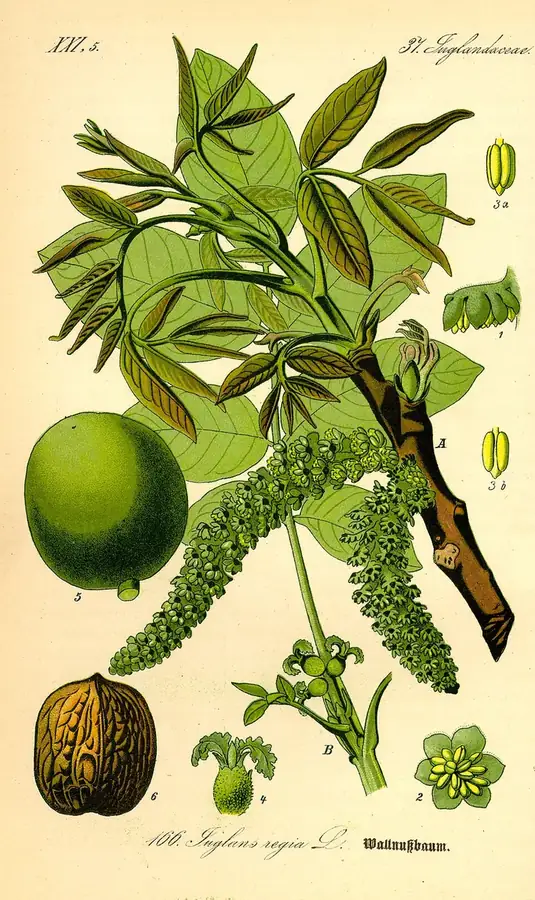
This profile concerns dried leaf, not the husk, walnut or fresh leaf.
An illustration is not enough to identify a plant for consumption. Do not forage for a species based solely on this profile.
01 · UNDERSTAND
Properties & uses.
Skin and perspiration
Traditional local use for minor skin inflammation and excessive sweating of the hands or feet.
Read the sourceThe traditional uses described are not clinical proof of effectiveness. Evidence for one preparation cannot automatically be applied to another.
02 · UNDERSTAND THE ACTION
How does the plant act?
Dried walnut leaves are recognised for traditional external use: minor skin inflammation and excessive sweating of the hands or feet. Research on blood glucose or liver protection uses other preparations and other routes. The EMA update specifically highlights this difference. Activity of an ingested extract cannot automatically extend the scope of an entry on a decoction applied to the skin.
Constituents to know.
Their presence and quantity depend on the plant part and preparation.
- Juglone
- Its potential presence in oral extracts is a concern noted by the EMA; this contributes to the decision not to propose oral use of leaves.Read the reference
Local application
The documented use of the comminuted leaf concerns the skin and localized sweating, rather than nutrition associated with walnut kernels.
Read the referenceBlood glucose: results that must not be turned into a recommendation
Human studies have explored swallowed aqueous extracts, but study size and analyses limit the conclusions, with a specific safety concern.
Read the referenceWhat this means for preparation.
Choose identified dried leaves and a defined topical use. Do not turn an external decoction into a drink or use hulls or walnuts as substitutes.
03 · EXAMINE THE EVIDENCE
What the research shows.
A laboratory or animal result alone does not demonstrate a benefit in humans. Each result must be read alongside the preparation studied and its limitations.
Why new studies did not broaden the monograph
- Type of research
- EMA literature review addendum.
- Preparation concerned
- Oral aqueous extracts in diabetes studies; methanolic or chloroform extracts in preclinical research.
- Observed results
- Signals have been reported, but they do not justify revising the use recognized for the comminuted leaves.
- Limitations to consider
- Noncomparable preparations, small samples and bias; possible presence of juglone is problematic for oral use.
What can we take from this?
These data validate neither diabetes treatment nor a liver regimen. A plant of scientific interest may remain unsuitable for oral self-medication.
Documentary review dated 09/10/2026. The references remain available to check the context.
04 · CHOOSE A PREPARATION
One plant, several preparations.
Only forms documented in this profile’s sources are presented.
Decoction for external useDried leaves · Route: topical
Comminuted dried leaves, prepared for topical application.
Please note: Do not use on open wounds or large lesions; no oral use is proposed.
Read the source05 · BEFORE ANY USE
Precautions & contraindications.
This guidance does not cover every individual situation. Missing information is not a guarantee of safety.
Contraindications
- Allergy to walnut.
- Do not apply to an open wound or extensive lesion.
Medicine interactions
- No established interaction is included in this entry; this does not guarantee compatibility with a treatment.
Adverse effects
- No effects reported in the EMA summary; this does not rule out allergy.
Pregnancy & breastfeeding
Pregnancy and breastfeeding: medicinal use is not recommended because of insufficient data.
Children & adolescents
For adults only in this leaflet; insufficient pediatric data.
If symptoms persist, worsen or are unusual, consult a healthcare professional. In an emergency, contact the emergency services.
06 · PUTTING KNOWLEDGE INTO PRACTICE
Preparations & recipes.
No home recipe is provided in this profile. For an appropriate preparation, refer to the product leaflet and ask your pharmacist for advice.
07 · CHECK THE SOURCES
Sources for this profile.
- EMA — Juglandis folium: assessment and documentsAccessed on 09/10/2026
- EMA — addendum to the assessment report on Juglans regia, leavesAccessed on 09/10/2026
Illustration: Otto Wilhelm Thomé · Public domain. View the original image and its licence. Image resized and converted to WebP.
A TOUCH OF SOLÉA
Myriam’s tip
Myriam is reviewing the tip for this profile.
Myriam