BOTANICAL IDENTITY
The right name is the first step.
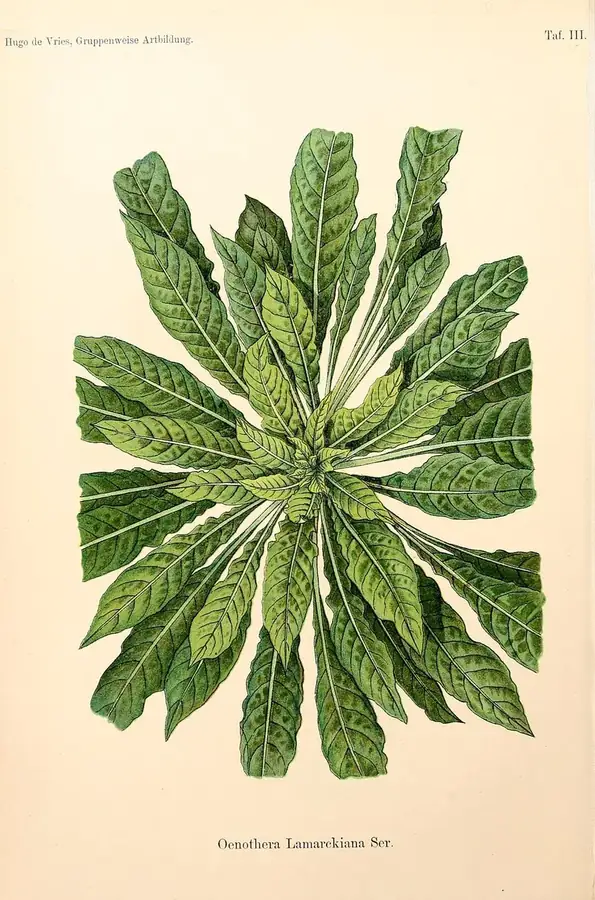
Also known as: Oenothera lamarckiana Ser., Lamarck's evening primrose
A common name and photograph do not guarantee identification. Check the botanical name and part indicated on a traceable product.
An illustration is not enough to identify a plant for consumption. Do not forage for a species based solely on this profile.
01 · UNDERSTAND
Properties & uses.
Itching of dry skin
Traditional use of the oil; trials do not allow efficacy against eczema to be asserted.
Read the sourceThe traditional uses described are not clinical proof of effectiveness. Evidence for one preparation cannot automatically be applied to another.
02 · UNDERSTAND THE ACTION
How does the plant act?
This entry concerns fatty oil obtained from the seeds, not essential oil from the flowers. Oenothera grandiflora appears in medicinal product nomenclature with the historical name O. lamarckiana. The assessment concerns evening primrose oil from the accepted group; it does not prove effectiveness specific to this species. Use for itching associated with dry skin remains traditional.
Dry skin: a limited use
Traditional use targets skin discomfort. It is not enough to qualify the oil as an eczema treatment or attribute a hormonal action to it.
Read the referenceWhat this means for preparation.
Distinguish an oral product from a cosmetic for application. The species, seed, extraction method and storage conditions must be identifiable.
03 · EXAMINE THE EVIDENCE
What the research shows.
A laboratory or animal result alone does not demonstrate a benefit in humans. Each result must be read alongside the preparation studied and its limitations.
Why “evening primrose oil” is not enough
- Type of research
- Regulatory assessment of the group of oils
- Preparation concerned
- Seed oil, in the preparations defined by the monograph.
- Observed results
- Traditional use is recognized; trials do not establish convincing efficacy for eczema.
- Limitations to consider
- The data do not isolate a benefit of O. grandiflora. Do not apply the results of a specific product to every food or cosmetic oil.
What can we take from this?
The content of this profile does not provide a means to balance hormones or treat diagnosed dermatitis. The public leaflet does not provide a complete batch-specific chemical profile.
Documentary review dated 09/10/2026. The references remain available to check the context.
04 · CHOOSE A PREPARATION
One plant, several preparations.
Only forms documented in this profile’s sources are presented.
Encapsulated seed oilSeeds · Route: oral
Fatty oil, distinct from an essential oil.
Please note: Follow the product's package leaflet; concentrations are not interchangeable.
Read the source05 · BEFORE ANY USE
Precautions & contraindications.
This guidance does not cover every individual situation. Missing information is not a guarantee of safety.
Contraindications
- Allergy to the preparation.
Medicine interactions
- The selected data do not allow compatibility with your treatments to be guaranteed. Ask a pharmacist to check.
Adverse effects
- Digestive disturbances, headache or rash are possible.
Pregnancy & breastfeeding
Pregnancy and breastfeeding: medicinal use is not recommended; insufficient data.
Children & adolescents
Medicinal use is not recommended under 12 years.
If symptoms persist, worsen or are unusual, consult a healthcare professional. In an emergency, contact the emergency services.
06 · PUTTING KNOWLEDGE INTO PRACTICE
Preparations & recipes.
No home recipe is provided in this profile. For an appropriate preparation, refer to the product leaflet and ask your pharmacist for advice.
07 · CHECK THE SOURCES
Sources for this profile.
- EMA — oenotherae oleumAccessed on 09/10/2026
- Kew MPNS — nomenclature of sources of evening primrose oilAccessed on 09/10/2026
Illustration: Vries, Hugo de · Public domain. View the original image and its licence. Image resized and converted to WebP.
A TOUCH OF SOLÉA
Myriam’s tip
Myriam is reviewing the tip for this profile.
Myriam