BOTANICAL IDENTITY
The right name is the first step.
Also known as: Small nettle
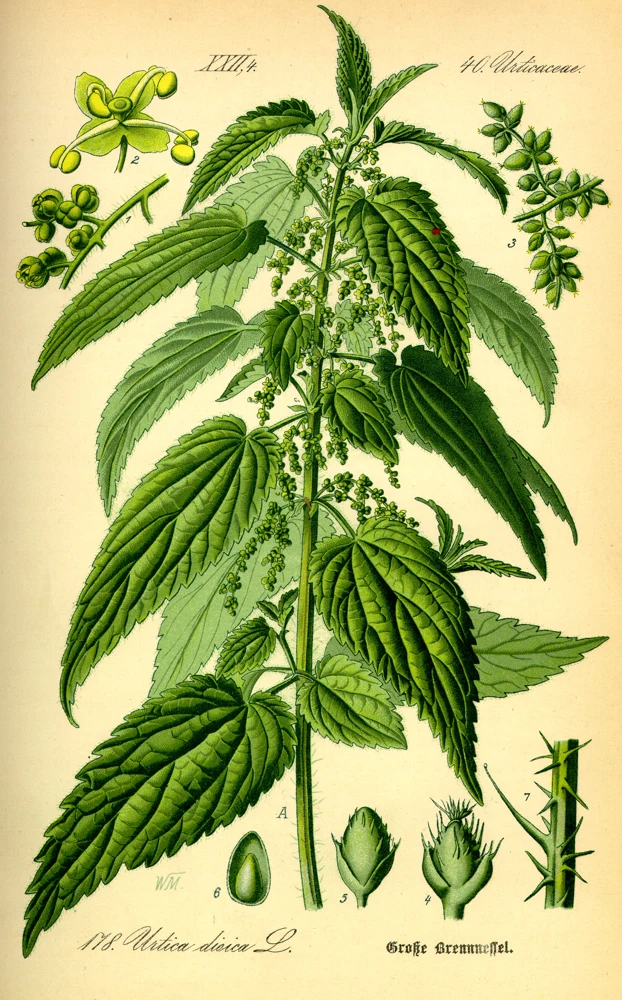
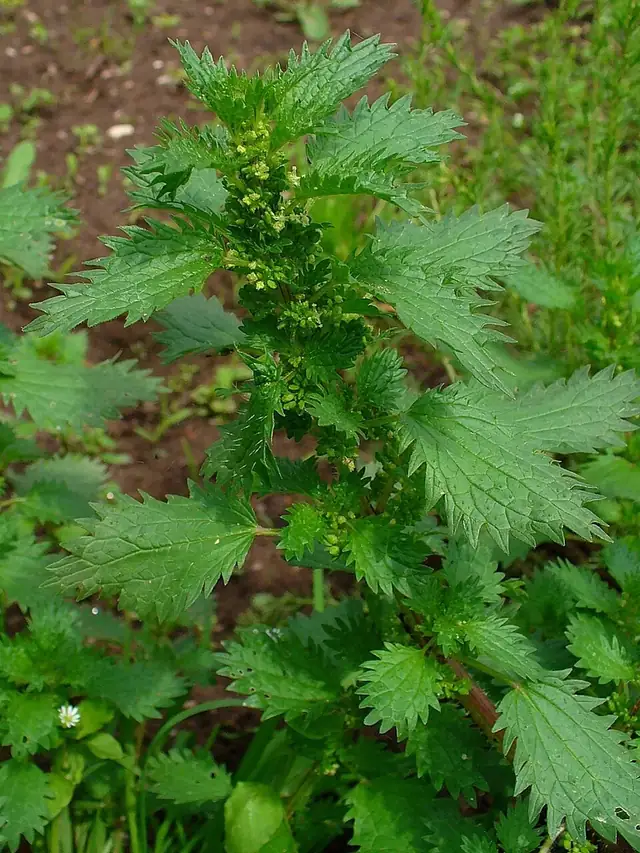
A common name and photograph do not guarantee identification. Check the botanical name and part indicated on a traceable product.
An illustration is not enough to identify a plant for consumption. Do not forage for a species based solely on this profile.
01 · UNDERSTAND
Properties & uses.
Minor joint pain
Use of the monographed group; the source does not demonstrate a benefit specific to each species.
Read the sourceUrinary drainage
Traditional supportive use; does not replace treatment of a urinary tract infection.
Read the sourceThe traditional uses described are not clinical proof of effectiveness. Evidence for one preparation cannot automatically be applied to another.
02 · UNDERSTAND THE ACTION
How does the plant act?
Small nettle is documented here for its leaves, within a traditional joint and urinary-use framework shared with U. dioica. A study specific to U. urens provides preclinical findings, making it possible to go beyond comparison with its larger relative without claiming to have a clinical trial. The roots used in other products are not covered by this profile.
Constituents to know.
Their presence and quantity depend on the plant part and preparation.
- Leaf polyphenols
- Ethanol extraction in the cited study recovers more phenolic compounds, flavonoids and tannins than the aqueous extraction compared.Read the reference
Experimental inflammation
The ethanolic extract reduces induced edema in rats. This explores an acute inflammatory response; the model is not human osteoarthritis.
Read the referenceTraditional urinary support
Leaf use is intended for minor complaints; it is not a proven treatment for urinary tract infection.
Read the referenceWhat this means for preparation.
Leaf powder, herbal tea and an alcoholic extract cannot be compared solely by the stated mass. Extraction selects different constituents.
03 · EXAMINE THE EVIDENCE
What the research shows.
A laboratory or animal result alone does not demonstrate a benefit in humans. Each result must be read alongside the preparation studied and its limitations.
Leaves, solvents and an animal model
- Type of research
- Chemical analyses and carrageenan-induced paw edema in rats
- Preparation concerned
- Aqueous and ethanolic extracts of U. urens leaves.
- Observed results
- With the ethanolic extract, reduced oedema and altered oxidative stress markers.
- Limitations to consider
- Neither a clinical trial nor proof of a benefit of the same magnitude from herbal tea; enzyme markers are not outcomes experienced by a patient.
What can we take from this?
Root results for prostate problems or results for U. dioica are not automatically attributed to U. urens leaf.
Documentary review dated 09/10/2026. The references remain available to check the context.
04 · CHOOSE A PREPARATION
One plant, several preparations.
Only forms documented in this profile’s sources are presented.
InfusionLeaves · Route: oral
Preparation described in the shared monograph.
Please note: Follow the product's package leaflet; concentrations are not interchangeable.
Read the sourceExtractLeaves · Route: oral
Preparation described in the shared monograph.
Please note: Follow the product's package leaflet; concentrations are not interchangeable.
Read the source05 · BEFORE ANY USE
Precautions & contraindications.
This guidance does not cover every individual situation. Missing information is not a guarantee of safety.
Contraindications
- Fluid restriction, heart or kidney failure with edema; nettle allergy.
Medicine interactions
- The selected data do not allow compatibility with your treatments to be guaranteed. Ask a pharmacist to check.
Adverse effects
- Stop use if an unexpected reaction occurs; limited data do not mean absence of risk.
Pregnancy & breastfeeding
Pregnancy and breastfeeding: medicinal use is not recommended; insufficient data.
Children & adolescents
Leaf: medicinal use not recommended under 12 years.
If symptoms persist, worsen or are unusual, consult a healthcare professional. In an emergency, contact the emergency services.
06 · PUTTING KNOWLEDGE INTO PRACTICE
Preparations & recipes.
No home recipe is provided in this profile. For an appropriate preparation, refer to the product leaflet and ask your pharmacist for advice.
07 · CHECK THE SOURCES
Sources for this profile.
- EMA — urticae foliumAccessed on 09/10/2026
- EMA — assessment of nettle leafAccessed on 09/10/2026
- ANSES — precautions for plants in supplements, 2023 tableAccessed on 09/10/2026
- Mzid et al. — composition and activities of Urtica urens leaves (2017)Accessed on 09/10/2026
Illustration: H. Zell · CC BY-SA 3.0. View the original image and its licence. Image resized and converted to WebP.
A TOUCH OF SOLÉA
Myriam’s tip
Myriam is reviewing the tip for this profile.
Myriam