BOTANICAL IDENTITY
The right name is the first step.
Also known as: No synonyms listed.
The botanical name, part and preparation must match. A photograph is not enough for identification intended for consumption.
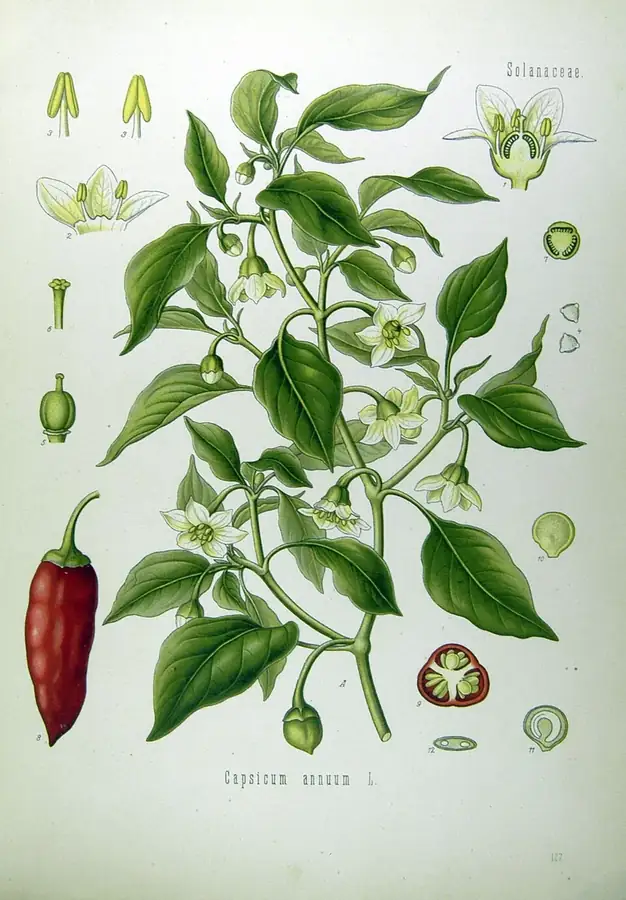
An illustration is not enough to identify a plant for consumption. Do not forage for a species based solely on this profile.
01 · UNDERSTAND
Properties & uses.
Muscle pain
Well-established use of topical preparations, particularly for certain cases of low back pain.
Read the sourceThe traditional uses described are not clinical proof of effectiveness. Evidence for one preparation cannot automatically be applied to another.
02 · UNDERSTAND THE ACTION
How does the plant act?
The medicinal action considered concerns topical products based on specific peppers for muscle pain such as certain types of lower back pain. The initial sensation of warmth is not itself proof of relief. Capsaicinoids first excite sensory nerve endings and may then cause desensitization. This mechanism explains both the desired effect and possible irritation; it does not justify a poultice made from culinary peppers.
Constituents to know.
Their presence and quantity depend on the plant part and preparation.
- Capsaicinoids
- Capsaicin is a major pungent constituent. Concentrations and formulations determine skin exposure; a fruit extract and the isolated substance are not identical.Read the reference
Excitation followed by desensitization
After application, redness, warmth or burning may precede a reduction in pain sensitivity. The report describes a change in the functioning of peripheral sensory neurons.
Read the referenceLocal muscle pain
The EMA recognizes well-established medicinal use for defined topical preparations. This recognition does not cover all chili peppers or all types of pain.
Read the referenceWhat this means for preparation.
Use only a formulation intended for the skin. Contact with the eyes, mucous membranes or damaged skin increases irritation problems; a burning sensation should not become a goal.
03 · EXAMINE THE EVIDENCE
What the research shows.
A laboratory or animal result alone does not demonstrate a benefit in humans. Each result must be read alongside the preparation studied and its limitations.
Which results can be extrapolated?
- Type of research
- EMA assessment of pharmacology and clinical studies.
- Preparation concerned
- Topical Capsicum products and additional data on capsaicin.
- Observed results
- The data support the selected local indication.
- Limitations to consider
- Studies of isolated capsaicin or highly concentrated devices provide supporting evidence; they do not validate a home preparation.
What can we take from this?
The local effect demonstrates neither joint repair nor treatment of the cause of pain. Highly concentrated professional products fall within a different framework.
Documentary review dated 09/10/2026. The references remain available to check the context.
04 · CHOOSE A PREPARATION
One plant, several preparations.
Only forms documented in this profile’s sources are presented.
CreamFruits of medicinal varieties · Route: topical
Medicated plasterFruits of medicinal varieties · Route: topical
Standardized preparation to be applied according to its package leaflet.
Please note: Avoid the eyes, mucous membranes and damaged skin.
Read the source05 · BEFORE ANY USE
Precautions & contraindications.
This guidance does not cover every individual situation. Missing information is not a guarantee of safety.
Contraindications
- Allergy to peppers or capsaicin.
- Do not apply to wounds, eczema or damaged skin.
Medicine interactions
- Interactions are not detailed here: have a pharmacist check treatments and the preparation.
Adverse effects
- Redness, local burning; possible skin allergies.
Pregnancy & breastfeeding
Pregnancy and breastfeeding: have the preparation checked; no self-medication is proposed here.
Children & adolescents
For adults only.
If symptoms persist, worsen or are unusual, consult a healthcare professional. In an emergency, contact the emergency services.
06 · PUTTING KNOWLEDGE INTO PRACTICE
Preparations & recipes.
No home recipe is provided in this profile. For an appropriate preparation, refer to the product leaflet and ask your pharmacist for advice.
07 · CHECK THE SOURCES
Sources for this profile.
- EMA — Capsici fructus: official dossierAccessed on 09/10/2026
- EMA — assessment report on Capsicum annuum L. (Fruits of medicinal varieties)Accessed on 09/10/2026
Illustration: Franz Eugen Köhler · Public domain. View the original image and its licence. Image resized and converted to WebP.
A TOUCH OF SOLÉA
Myriam’s tip
Myriam is reviewing the tip for this profile.
Myriam