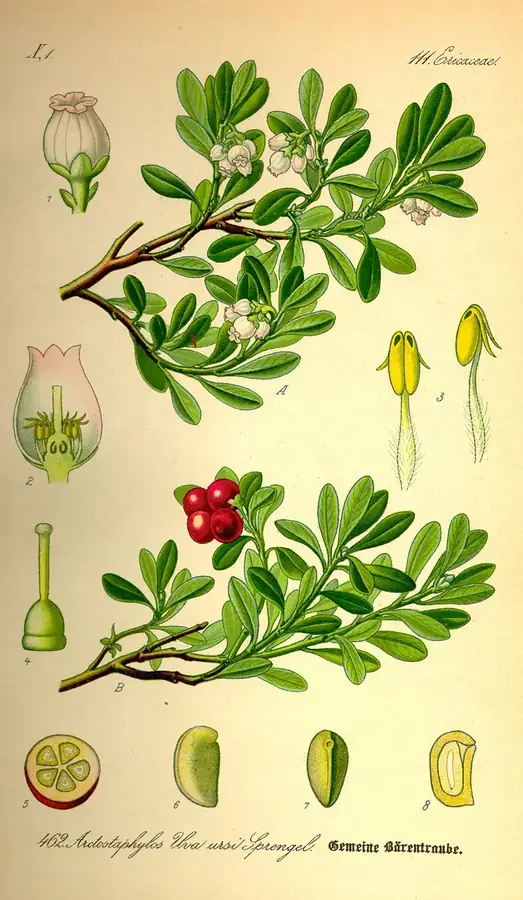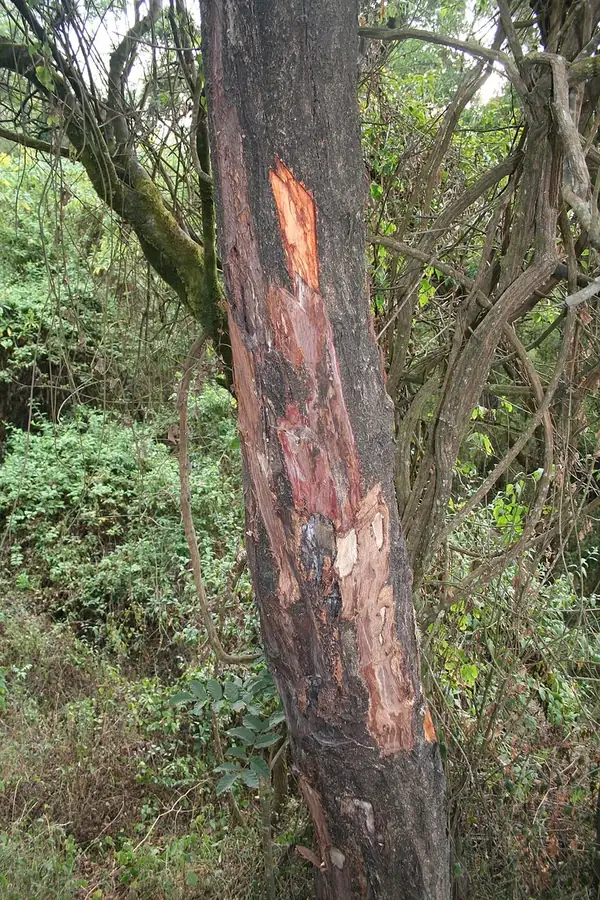
BOTANICAL IDENTITY
The right name is the first step.
Also known as: Pygeum africanum
The botanical name and part used must match the profile; a photograph alone is not sufficient grounds for consuming a plant.
An illustration is not enough to identify a plant for consumption. Do not forage for a species based solely on this profile.
01 · UNDERSTAND
Properties & uses.
Prostate-related urinary symptoms
Traditional use after a diagnosis of benign prostatic enlargement and exclusion of a serious disease by a doctor.
Read the sourceThe traditional uses described are not clinical proof of effectiveness. Evidence for one preparation cannot automatically be applied to another.
02 · UNDERSTAND THE ACTION
How does the plant act?
African cherry bark has been studied mainly as lipophilic extracts for certain urinary symptoms associated with benign prostatic enlargement. The aim is symptomatic: neither to prove lasting prostate shrinkage nor to treat cancer. Despite numerous older studies, the EMA recognized traditional use for a specific preparation after serious causes have been medically excluded.
Constituents to know.
Their presence and quantity depend on the plant part and preparation.
- Lipophilic fraction
- Phytosterols, particularly beta-sitosterol, and fatty acid or ferulic acid esters are studied; their presence does not make a decoction equivalent to the extract.Read the reference
Prostate-related urinary symptoms
The intended relief concerns discomfort related to diagnosed benign prostatic enlargement; it does not establish prevention of urinary retention.
Read the referenceWhat this means for preparation.
The species name, the part “bark” and the extract type matter more than a general “prostate” label. The assessed preparation is not a home recipe.
03 · EXAMINE THE EVIDENCE
What the research shows.
A laboratory or animal result alone does not demonstrate a benefit in humans. Each result must be read alongside the preparation studied and its limitations.
Numerous but old trials
- Type of research
- EMA report examining, among other things, a synthesis of 18 randomised trials involving 1,562 men.
- Preparation concerned
- Bark extracts of Pygeum/Prunus africana, not always described consistently.
- Observed results
- The results suggest an improvement in certain urinary symptoms.
- Limitations to consider
- Short studies, rarely described allocation concealment and no comparisons with the reference treatments cited in this review: the evidence was judged insufficient for well-established use.
What can we take from this?
The limited duration of trials prevents conclusions about long-term protection against prostate complications. Worsening difficulty urinating requires medical assessment.
Documentary review dated 09/10/2026. The references remain available to check the context.
04 · CHOOSE A PREPARATION
One plant, several preparations.
Only forms documented in this profile’s sources are presented.
Standardised extractBark · Route: oral
Specific soft extract presented in a solid form.
Please note: The conclusions do not apply to a homemade decoction.
Read the source05 · BEFORE ANY USE
Precautions & contraindications.
This guidance does not cover every individual situation. Missing information is not a guarantee of safety.
Contraindications
- Allergy to the preparation.
Medicine interactions
- None reported in the monograph; check medications.
Adverse effects
- Rare nausea, constipation or diarrhea.
Pregnancy & breastfeeding
The indication concerns adult men; no obstetric recommendation can be drawn from it.
Children & adolescents
For adult men only.
If symptoms persist, worsen or are unusual, consult a healthcare professional. In an emergency, contact the emergency services.
06 · PUTTING KNOWLEDGE INTO PRACTICE
Preparations & recipes.
No home recipe is provided in this profile. For an appropriate preparation, refer to the product leaflet and ask your pharmacist for advice.
07 · CHECK THE SOURCES
Sources for this profile.
- EMA — Pruni africanae cortex: dossier and documentsAccessed on 09/10/2026
- EMA — monograph: Pruni africanae cortexAccessed on 09/10/2026
- ANSES — precautions for herbal supplements, June 2023 tableAccessed on 09/10/2026
- EMA — scientific assessment report: Prunus africanaAccessed on 09/10/2026
Illustration: Marco Schmidt [1] · CC BY-SA 2.5. View the original image and its licence. Image resized and converted to WebP.
A TOUCH OF SOLÉA
Myriam’s tip
Myriam is reviewing the tip for this profile.
Myriam