BOTANICAL IDENTITY
The right name is the first step.
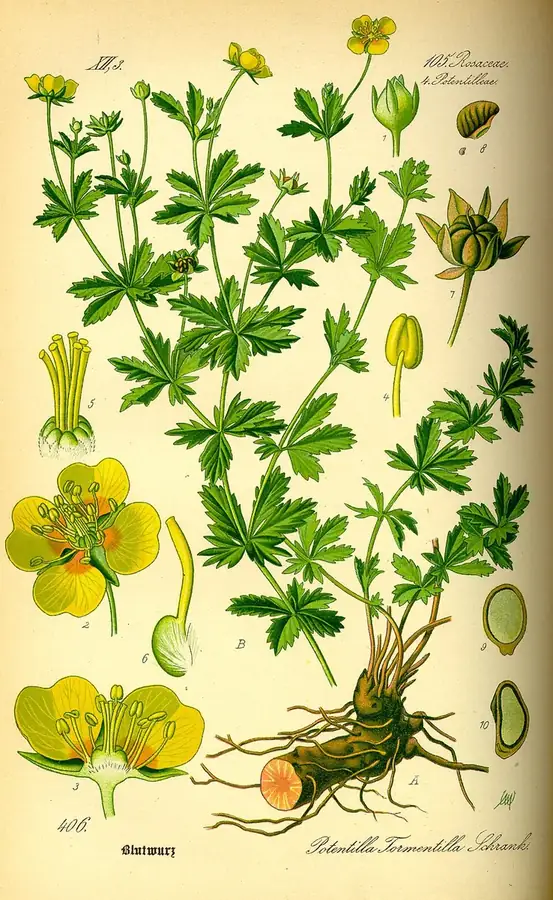
Also known as: tormentil
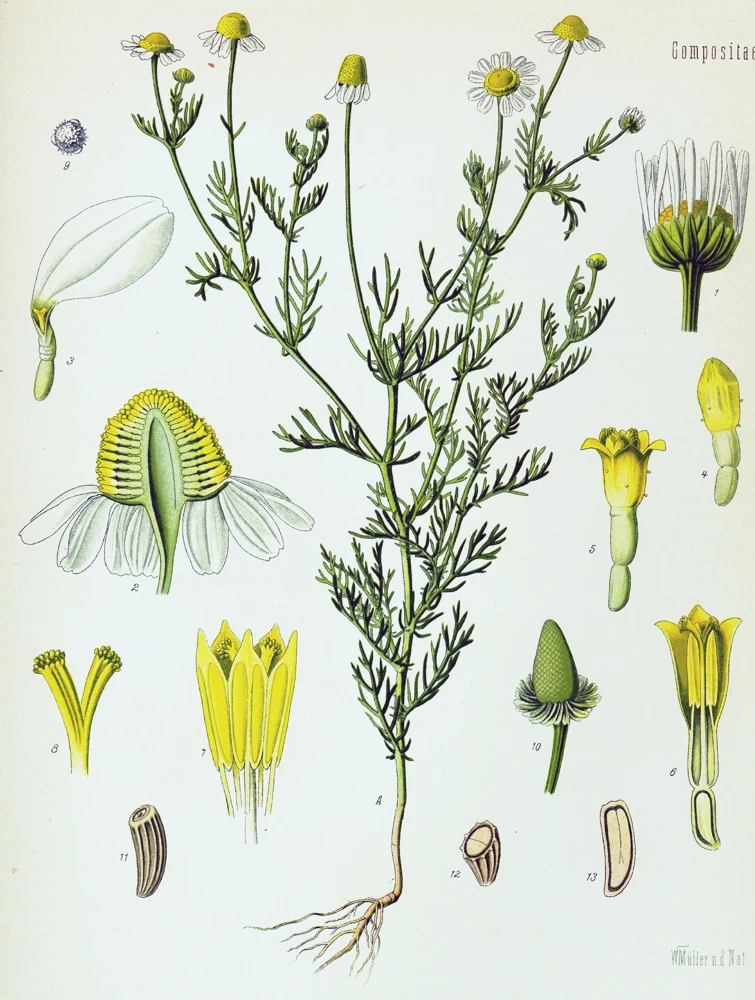
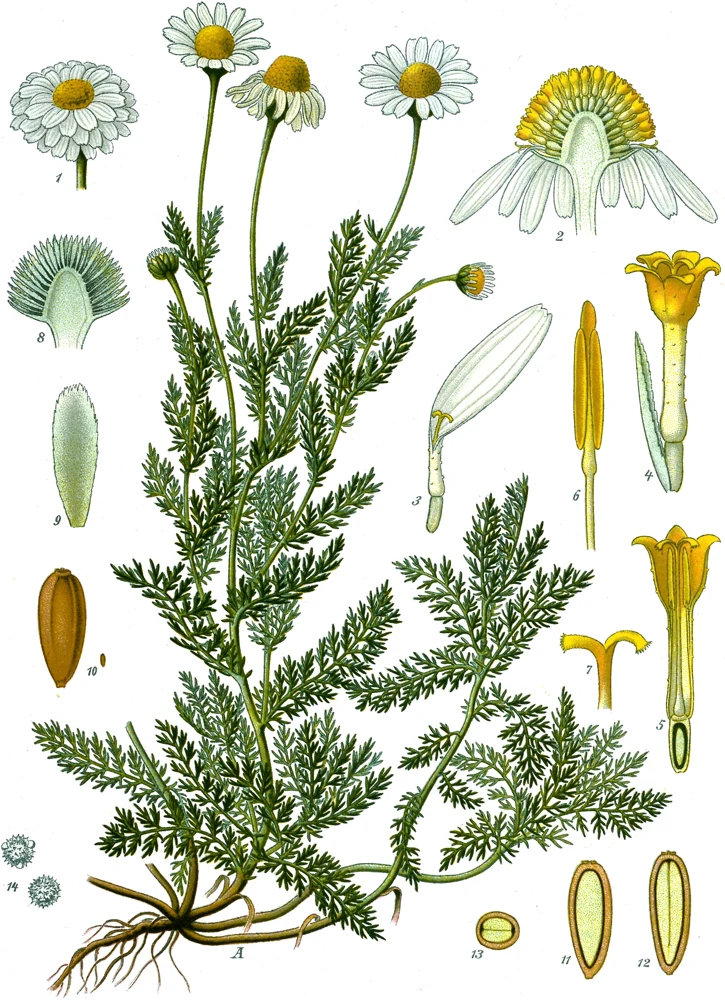
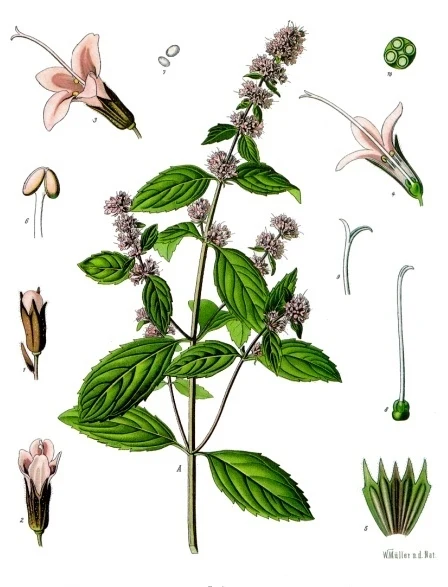
Do not confuse the different cinquefoils.
An illustration is not enough to identify a plant for consumption. Do not forage for a species based solely on this profile.
01 · UNDERSTAND
Properties & uses.
The traditional uses described are not clinical proof of effectiveness. Evidence for one preparation cannot automatically be applied to another.
02 · UNDERSTAND THE ACTION
How does the plant act?
Tormentil rhizome is rich in tannins, which explains the interest in its astringency. The recognized uses remain traditional: mild diarrhea and minor inflammation of the mouth. The desired action is mainly local, on surfaces in contact with the preparation. This framework does not allow the plant to be presented as a treatment for every form of diarrhea or for inflammatory bowel disease.
Constituents to know.
Their presence and quantity depend on the plant part and preparation.
- Condensed and hydrolyzable tannins
- The rhizome contains ellagitannins, including agrimoniin, and catechin-related compounds, among other constituents; their proportion depends on the preparation.Read the reference
Local astringency
Tannin–protein interactions make a reduction in secretions and superficial irritation plausible; clinical translation remains limited.
Read the referenceMouth and mild diarrhea
Gargling or mouth rinsing and oral administration correspond to two distinct traditional uses.
Read the referenceWhat this means for preparation.
The oral cavity formulation must be suitable for this route. The monograph notes a possible delay in the absorption of other medicines, making it useful to check medicines taken alongside it.
03 · EXAMINE THE EVIDENCE
What the research shows.
A laboratory or animal result alone does not demonstrate a benefit in humans. Each result must be read alongside the preparation studied and its limitations.
How much weight should be given to tradition?
- Type of research
- EMA assessment of pharmacological and clinical data.
- Preparation concerned
- Potentilla erecta rhizome and extracts characterized to varying degrees.
- Observed results
- The assessment retains recognition based on long-standing use.
- Limitations to consider
- High tannin content alone does not establish a quantified clinical benefit or replace investigation of the cause of persistent diarrhea.
What can we take from this?
Diarrhoea with blood, fever or dehydration falls outside the scope of minor traditional use; astringency is not equivalent to antibiotic action.
Documentary review dated 09/10/2026. The references remain available to check the context.
04 · CHOOSE A PREPARATION
One plant, several preparations.
Only forms documented in this profile’s sources are presented.
Herbal teaRhizome · Route: oral
MouthwashRhizome · Route: mouth
Infusion, decoction or tincture intended for this use.
Please note: Do not substitute an unsuitable tincture.
Read the source05 · BEFORE ANY USE
Precautions & contraindications.
This guidance does not cover every individual situation. Missing information is not a guarantee of safety.
Contraindications
- Allergy to the plant.
Medicine interactions
- Oral use: separate by at least one hour from medicines, whose absorption may be delayed.
Adverse effects
- Nausea or vomiting possible.
Pregnancy & breastfeeding
Pregnancy and breastfeeding: medicinal use is not recommended due to insufficient data.
Children & adolescents
Medicinal use for adults only.
If symptoms persist, worsen or are unusual, consult a healthcare professional. In an emergency, contact the emergency services.
06 · PUTTING KNOWLEDGE INTO PRACTICE
Preparations & recipes.
A DOCUMENTED PREPARATION
Tormentil mouth rinse
Traditional use for minor oral mucosal inflammation. Tannins have an astringent action; clinical trials do not establish a reliable benefit.
Plant part: Dried, fragmented rhizome
Ingredients & quantities
- 0.8–3 g quality-controlled, dried Potentilla erecta (L.) Raeusch. rhizome
- 100 ml cold drinking water
Preparation steps
- Place the weighed rhizome in the 100 ml cold water.
- Bring to the boil, then simmer for 15–30 minutes: the EMA glossary’s general method, as the monograph gives no preparation-specific time. Follow the leaflet first.
- Strain carefully and allow to cool to a comfortable temperature before use.
- Rinse the mouth, then spit out.
Use: Adults aged 18+ only. EMA reference: several rinses daily, with no exact number or contact time stated. Seek advice if symptoms worsen or last over one week.
Storage: Prepare immediately before use. The monograph establishes no storage period for this water-based preparation; do not make a stock batch.
Before you start. Do not swallow or use in the eyes. Contraindicated with tormentil allergy. Medicinal use is not recommended during pregnancy or breastfeeding because data are insufficient. Does not replace dental assessment for pain, swelling or persistent bleeding.
07 · CHECK THE SOURCES
Sources for this profile.
- EMA — Tormentillae rhizoma: dossier and documentsAccessed on 09/10/2026
- EMA — Monograph on Potentilla erecta (L.) Raeusch., rhizomaAccessed on 09/10/2026
- ANSES — precautions for herbal supplements, June 2023 tableAccessed on 09/10/2026
- EMA — scientific assessment report: Potentilla erectaAccessed on 09/10/2026
- EMA — Glossary on herbal teas, general method (§4)Accessed on 09/10/2026
Illustration: Flora von Deutschland, Österreich und der Schweiz — Otto Wilhelm Thomé (1885), via Wikimedia Commons · Public domain. View the original image and its licence. Image resized and converted to WebP.
A TOUCH OF SOLÉA
Myriam’s tip
Myriam is reviewing the tip for this profile.
Myriam