BOTANICAL IDENTITY
The right name is the first step.
Also known as: No synonyms listed.
The botanical name, part and preparation must match. A photograph is not enough for identification intended for consumption.
An illustration is not enough to identify a plant for consumption. Do not forage for a species based solely on this profile.
01 · UNDERSTAND
Properties & uses.
Cold symptoms
Traditional use; does not replace assessment of a severe infection.
Read the sourceThe traditional uses described are not clinical proof of effectiveness. Evidence for one preparation cannot automatically be applied to another.
02 · UNDERSTAND THE ACTION
How does the plant act?
Echinacea pallida root has a traditional use for cold symptoms. A controlled trial suggests a benefit, but the EMA report explains why it is insufficient for well-established use: a poorly described extract and an unvalidated symptom score. These are concrete limitations; they prevent knowing whether another product would reproduce the result.
Cold symptoms and duration
A favorable effect was reported in one trial, but the strength of the evidence remains limited. The European indication remains traditional.
Read the referencePrevention: missing evidence
The report has no clinical data demonstrating prevention of infections by this root. This gap must not be filled with results from other echinaceas.
Read the referenceWhat this means for preparation.
Checking pallida, root and hydroalcoholic form is essential. A powder or combination does not become equivalent to the extract in the only available trial.
03 · EXAMINE THE EVIDENCE
What the research shows.
A laboratory or animal result alone does not demonstrate a benefit in humans. Each result must be read alongside the preparation studied and its limitations.
Available trial and identified limitations
- Type of research
- Randomized double-blind placebo-controlled trial, 160 patients, eight to ten days, analyzed by the EMA.
- Preparation concerned
- Insufficiently characterized hydroalcoholic root extract.
- Observed results
- Improved symptoms and shorter duration were reported.
- Limitations to consider
- Incomplete composition and an unvalidated outcome prevent a firm conclusion; pediatric studies of mixtures do not establish the effect of this root alone.
What can we take from this?
No single active ingredient is identified here because the data consulted are insufficiently precise. This profile promises neither prevention of all infections nor treatment of a severe respiratory infection.
Documentary review dated 09/10/2026. The references remain available to check the context.
04 · CHOOSE A PREPARATION
One plant, several preparations.
Only forms documented in this profile’s sources are presented.
Dry extractRoot · Route: oral
Defined hydroalcoholic extract in solid form.
Please note: Check the preparation and its leaflet; concentrations are not interchangeable.
Read the sourceTinctureRoot · Route: oral / mouth
Specific preparation according to the package leaflet.
Please note: Contains alcohol; do not extrapolate drop counts between products.
Read the source05 · BEFORE ANY USE
Precautions & contraindications.
This guidance does not cover every individual situation. Missing information is not a guarantee of safety.
Contraindications
- Allergy to Asteraceae.
- Immune disease or treatment affecting immunity: no independent use.
Medicine interactions
- Interactions are not detailed here: have a pharmacist check treatments and the preparation.
Adverse effects
- This entry does not provide an exhaustive list of adverse effects.
Pregnancy & breastfeeding
Medicinal use is not recommended during pregnancy and breastfeeding due to insufficient data.
Children & adolescents
Not recommended under 12 years.
If symptoms persist, worsen or are unusual, consult a healthcare professional. In an emergency, contact the emergency services.
06 · PUTTING KNOWLEDGE INTO PRACTICE
Preparations & recipes.
No home recipe is provided in this profile. For an appropriate preparation, refer to the product leaflet and ask your pharmacist for advice.
07 · CHECK THE SOURCES
Sources for this profile.
- EMA — Echinaceae pallidae radix: official dossierAccessed on 09/10/2026
- EMA — Monograph or public statement on Echinacea pallidaAccessed on 09/10/2026
- ANSES — precautions for plants in food supplements, June 2023 summaryAccessed on 09/10/2026
- EMA — assessment report on Echinacea pallida (Nutt.) Nutt. (Root)Accessed on 09/10/2026
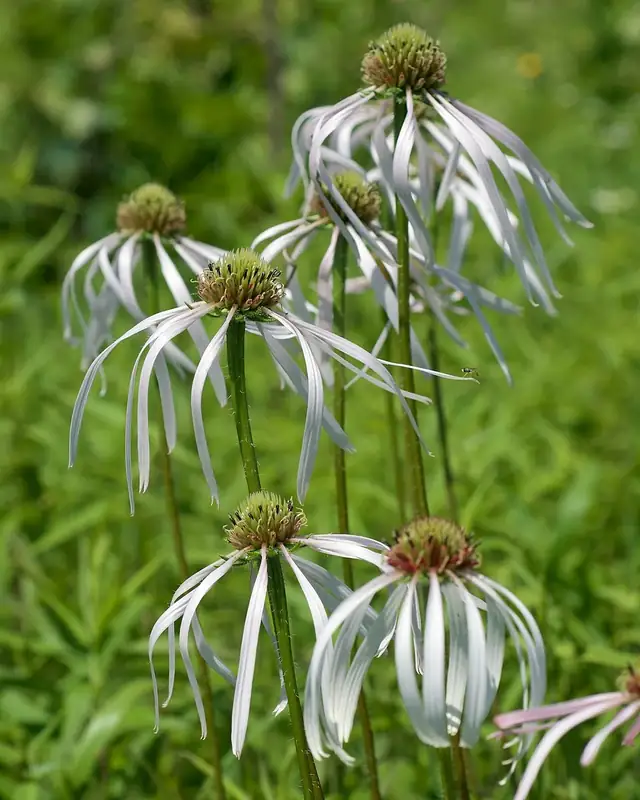
Illustration: Eric Hunt · CC BY-SA 4.0. View the original image and its licence. Image resized and converted to WebP.
A TOUCH OF SOLÉA
Myriam’s tip
Myriam is reviewing the tip for this profile.
Myriam