Identity & origin
BOTANICAL IDENTITY
The right name is the first step.
Grindelia robusta is the name used in the EMA dossier; Kew treats it as a synonym of Grindelia hirsutula.
Also known as: Grindelia hirsutula
The EMA dossier covers several Grindelia species; synonyms do not represent additional plants.
An illustration is not enough to identify a plant for consumption. Do not forage for a species based solely on this profile.
Uses & evidence
UNDERSTANDING THE USES
Properties & uses.
Cough associated with a cold
Traditional oral use of the herb, as tea or specified extracts, for cold-associated cough. The shared monograph does not demonstrate clinical efficacy separately for each species.
Use considered plausible in a traditional-use monograph. That status alone does not demonstrate clinical efficacy.
Read the sourceThe traditional uses described are not clinical proof of effectiveness. Evidence for one preparation cannot automatically be applied to another.
Precautions before use
BEFORE ANY USE
Precautions & contraindications.
This guidance does not cover every individual situation. Missing information is not a guarantee of safety.
Contraindications & precautions
- Source-listed contraindicationAllergy to grindelia or other Asteraceae plants.Source
Medicine interactions
- No interaction reported in the sourceNo interactions are reported in the monograph for the specified preparations; this does not establish compatibility with every medicine.Source
“Reported” does not prove causality; “possible” may reflect indirect evidence. “None reported” means none in the cited source, not that all combinations have been studied. Do not stop a prescribed treatment based on this profile.
Adverse effects
- Adverse effects insufficiently documented in the sources used here.
Pregnancy & breastfeeding
Medicinal use during pregnancy and breastfeeding is not recommended because adequate data are lacking; safety has not been established.
SourceChildren & adolescents
Medicinal use is not recommended below 18 years because adequate data are lacking; follow the preparation-specific leaflet.
SourceIf symptoms persist, worsen or are unusual, consult a healthcare professional. In an emergency, contact the emergency services.
Forms & how they are used
DOCUMENTED FORMS
One plant, several preparations.
Only forms documented in this profile’s sources are presented.
Herbal teaAerial parts · Route: oral
Cut aerial parts.
Please note: Follow the product's package leaflet; preparations are not interchangeable.
Read the sourceHydroalcoholic extractAerial parts · Route: oral
Documented liquid extract or tincture.
Please note: Take alcohol content into account and follow the package leaflet.
Read the sourcePreparations: ingredients & steps
DOCUMENTED PREPARATIONS
Preparations & recipes.
A DOCUMENTED PREPARATION
Grindelia infusion
Adult-only reference for cough associated with a cold. Traditional use; robust clinical trials have not established this preparation’s efficacy.
Plant part: Dried flowering tops
Ingredients & quantities
- 2–3 g dried, cut Grindelia robusta Nutt. flowering tops, supplied for herbal tea
- 150 ml boiling drinking water
Preparation steps
- Weigh the identified, dried, cut plant part supplied for this use.
- Pour 150 ml boiling drinking water over the herb.
- Steep for 5–15 minutes: the EMA glossary’s general reference, as the monograph gives no specific duration. Follow the product leaflet first.
- Strain and allow to cool to a comfortable temperature before use.
Use: For adults aged 18+ in this collection. One preparation per dose, up to 3 times daily. Seek advice after one week; immediately if worsening, breathing difficulty, high fever or purulent sputum occurs.
Storage: Prepare immediately before use. No storage period is established here; do not make a stock batch (EMA glossary, §4).
Before you start. Contraindicated with Grindelia or Asteraceae allergy. Use under 18 is not recommended because data are insufficient. This preparation does not treat an asthma attack. No reported interaction does not guarantee their absence. Use is not recommended during pregnancy or breastfeeding because data are insufficient.
Understanding the plant’s actions
EXPLORE THE EVIDENCE
How does the plant act?
Grindelia robusta appears in a European dossier shared by several Grindelia species. The recognized use concerns cough associated with a cold and remains traditional. A collective assessment does not provide experimental results specific to each species.
Cough associated with the common cold
The documented role is traditional symptomatic cough relief. The dossier does not allow it to be presented as a rescue bronchodilator or asthma treatment.
Use considered plausible in a traditional-use monograph. That status alone does not demonstrate clinical efficacy.
Read the referenceDefined herbal preparation
The aerial parts and their aqueous or hydroalcoholic preparations are the subject of the assessment. The existence of these forms does not establish their quantitative equivalence.
Use considered plausible in a traditional-use monograph. That status alone does not demonstrate clinical efficacy.
Read the referenceWhat this means for preparation.
Check the botanical name and whether alcohol is present. Trials on another species must remain identified as such.
Studies, findings & limitations
THE RESEARCH
What the research shows.
A laboratory or animal result alone does not demonstrate a benefit in humans. Each result must be read alongside the preparation studied and its limitations.
Scope of the shared monograph
Use considered plausible in a traditional-use monograph. That status alone does not demonstrate clinical efficacy.
- Type of research
- EMA regulatory assessment of uses and the literature.
- Preparation concerned
- Aerial parts of several Grindelia species included in the dossier.
- Observed results
- Traditional recognition was granted for cough associated with the common cold.
- Limitations to consider
- It does not provide an isolated clinical result for G. robusta; published effects for G. squarrosa are not attributed to this species.
What can we take from this?
No detailed chemical profile is attributed to this species without a verified source. Neither clinical anti-infective action nor efficacy in asthma is established.
Documentary review dated 09/10/2026. The references remain available to check the context.
Sources & last review
CHECKING REFERENCES
Sources for this profile.
- EMA — Grindeliae herba: assessment and documentsAccessed on 09/10/2026
- ANSES — summary of precautions for food supplements (June 2023)Accessed on 09/10/2026
- Kew — Grindelia robusta: synonymyAccessed on 09/10/2026
- EMA — document officiel relu : usages et sécurité, Grindélia robusteAccessed on 09/10/2026
- EMA — Glossary on herbal teas: general preparation method, §4Accessed on 09/10/2026
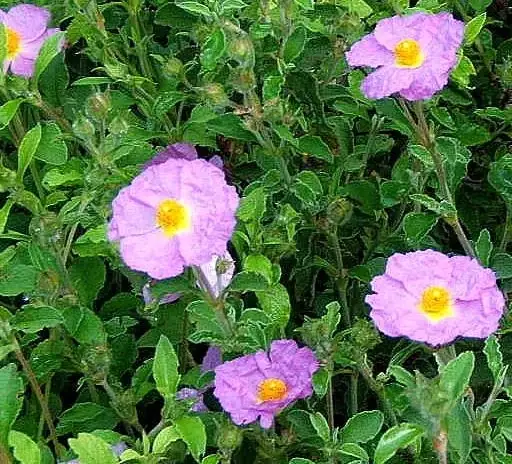
Image: Franco Folini from San Francisco, USA · CC BY-SA 2.0. View the original image and its licence. Image resized and converted to WebP.