BOTANICAL IDENTITY
The right name is the first step.
Also known as: No synonyms listed.
Do not use ornamental pelargoniums or “geranium” oil in place of root extract.
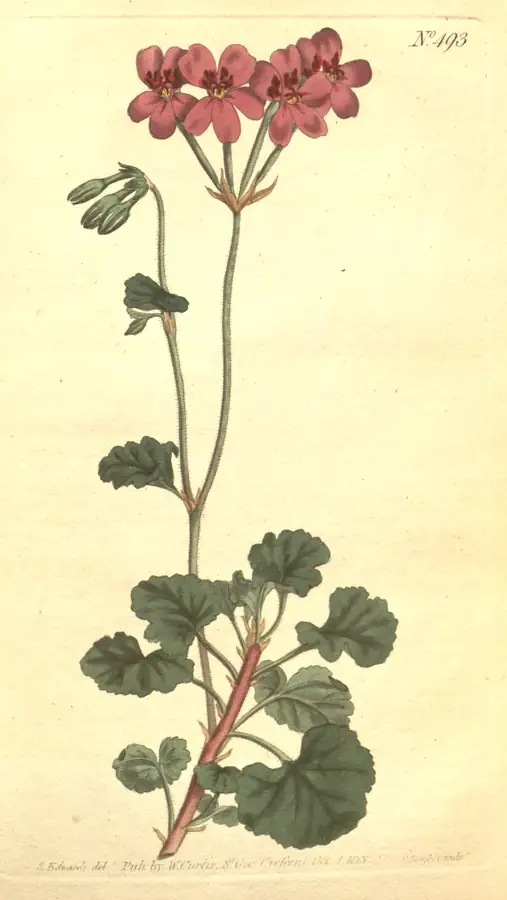
An illustration is not enough to identify a plant for consumption. Do not forage for a species based solely on this profile.
01 · UNDERSTAND
Properties & uses.
Cold symptoms
Traditional use of defined extracts; trials on other preparations or on P. sidoides are not evidence specific to this species.
Read the sourceThe traditional uses described are not clinical proof of effectiveness. Evidence for one preparation cannot automatically be applied to another.
02 · UNDERSTAND THE ACTION
How does the plant act?
P. reniforme is included with P. sidoides in the pelargonium root monograph. This does not mean that a trial of a P. sidoides extract separately demonstrates the efficacy of P. reniforme. For this species, the reference in the profile remains traditional use of defined extracts for common cold symptoms, not a general anti-infective promise.
Constituents to know.
Their presence and quantity depend on the plant part and preparation.
- Polyphenols and simple coumarins
- The shared report describes phenolic acids, coumarins, flavonoids and proanthocyanidins. Their presence does not identify a single substance responsible for the benefit.Read the reference
Cold symptoms
The intended effect falls within a traditional framework. Results from clinically studied products must remain linked to their species and manufacturing process.
Read the referenceWhat this means for preparation.
Comparison requires the Latin name, root, solvent and extract. The permitted age depends on the product; under six years, provisions relating to liquid forms are not an invitation to self-medicate.
03 · EXAMINE THE EVIDENCE
What the research shows.
A laboratory or animal result alone does not demonstrate a benefit in humans. Each result must be read alongside the preparation studied and its limitations.
Read the species behind the extract name
- Type of research
- EMA assessment, revision 2
- Preparation concerned
- Defined root extracts from the Pelargonium group; extensive work on P. sidoides.
- Observed results
- The dossier gathers pharmacological and human data on specific products.
- Limitations to consider
- No efficacy estimate specific to P. reniforme is included here. A root prepared at home does not automatically reproduce these products.
What can we take from this?
A plant origin does not exclude liver injury or a serious allergic reaction. These risks are not erased by experiments showing antimicrobial activity in the laboratory.
Documentary review dated 09/10/2026. The references remain available to check the context.
04 · CHOOSE A PREPARATION
One plant, several preparations.
Only forms documented in this profile’s sources are presented.
Liquid extractRoot · Route: oral
Preparation described in the shared monograph.
Please note: Check the alcohol content and package leaflet.
Read the sourceDry extractRoot · Route: oral
Preparation described in the shared monograph.
Please note: Follow the product's package leaflet; concentrations are not interchangeable.
Read the source05 · BEFORE ANY USE
Precautions & contraindications.
This guidance does not cover every individual situation. Missing information is not a guarantee of safety.
Contraindications
- Allergy to the preparation.
- Known liver disease: do not undertake self-medication.
Medicine interactions
- The selected data do not allow compatibility with your treatments to be guaranteed. Ask a pharmacist to check.
Adverse effects
- Digestive complaints, minor nose or gum bleeding; allergies that may be severe; liver injury, including hepatitis, reported.
Pregnancy & breastfeeding
Pregnancy and breastfeeding: medicinal use is not recommended; insufficient data.
Children & adolescents
Certain specific preparations are available from 3 years; under 6 years, only suitable liquid forms. Choice and administration should be confirmed with a professional.
If symptoms persist, worsen or are unusual, consult a healthcare professional. In an emergency, contact the emergency services.
06 · PUTTING KNOWLEDGE INTO PRACTICE
Preparations & recipes.
No home recipe is provided in this profile. For an appropriate preparation, refer to the product leaflet and ask your pharmacist for advice.
07 · CHECK THE SOURCES
Sources for this profile.
- EMA — pelargonii radixAccessed on 09/10/2026
- EMA — final assessment of Pelargonium roots, revision 2Accessed on 09/10/2026
Illustration: William Curtis · Public domain. View the original image and its licence. Image resized and converted to WebP.
A TOUCH OF SOLÉA
Myriam’s tip
Myriam is reviewing the tip for this profile.
Myriam