BOTANICAL IDENTITY
The right name is the first step.
Also known as: No synonyms listed.
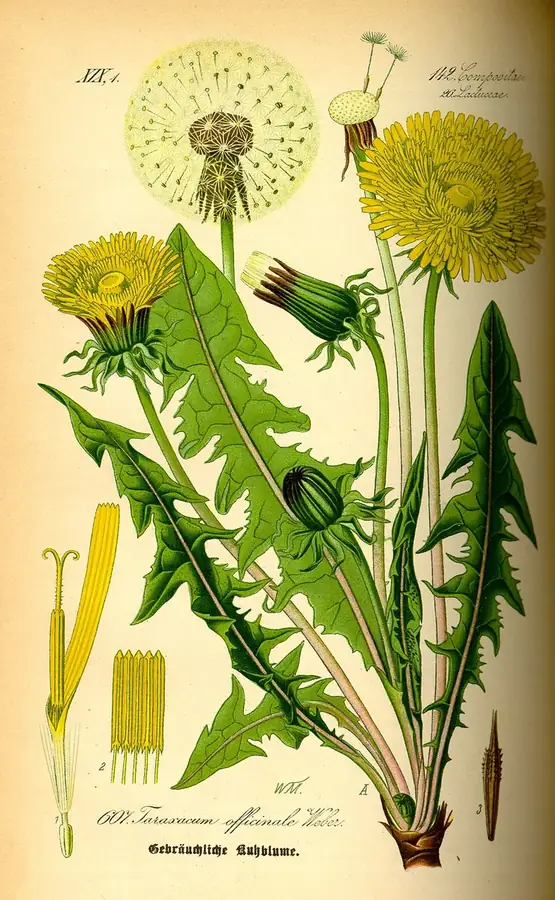
The botanical name and part used must match the profile; a photograph alone is not sufficient grounds for consuming a plant.
An illustration is not enough to identify a plant for consumption. Do not forage for a species based solely on this profile.
01 · UNDERSTAND
Properties & uses.
Digestion and appetite
The EMA recognizes a traditional use for root preparations; the hypothesis of biliary stimulation calls for precautions in biliary tract disease.
Read the sourceUrinary flushing
Traditional use aims to increase urine output with fluid intake, without demonstrated anti-infective action.
Read the sourceDandelion root decoction — slow digestion
Traditional use for mild digestive discomfort, bloating and slow digestion. This preparation uses root alone; it is not interchangeable with the leaves or root-with-herb material.
Read the sourceThe traditional uses described are not clinical proof of effectiveness. Evidence for one preparation cannot automatically be applied to another.
02 · UNDERSTAND THE ACTION
How does the plant act?
Dandelion must be described by part: root, leaf, and root with aerial parts have separate dossiers. The report examined in depth here concerns the root. Its traditional uses concern digestive heaviness, flatulence, slow digestion, temporary loss of appetite and support for minor urinary problems. This diversity does not mean that clinical efficacy has been demonstrated in each of these areas.
Constituents to know.
Their presence and quantity depend on the plant part and preparation.
- Bitter compounds and polyphenols
- The root has a profile of sesquiterpene lactones and phenolic acids; chemical characterization does not prove an effect in humans.Read the reference
Digestion and appetite
The EMA recognizes a traditional use for root preparations; the hypothesis of biliary stimulation calls for precautions in biliary tract disease.
Read the referenceUrinary flushing
Traditional use aims to increase urine output with fluid intake, without demonstrated anti-infective action.
Read the referenceWhat this means for preparation.
Specify the part before comparing products. Biliary caution matters more than a commercial “detox” promise; gallstones or biliary obstruction require medical advice.
03 · EXAMINE THE EVIDENCE
What the research shows.
A laboratory or animal result alone does not demonstrate a benefit in humans. Each result must be read alongside the preparation studied and its limitations.
No convincing clinical trial on the root
- Type of research
- Final EMA report of 2022.
- Preparation concerned
- Cut root, juice and defined liquid extracts of Taraxacum officinale.
- Observed results
- Longstanding use and plausibility support the traditional indications.
- Limitations to consider
- No clinical efficacy data or dose–response study was available; results on leaves or isolated molecules do not prove the effect of the root.
What can we take from this?
Increased urine output does not prove improved kidney function. No cited result demonstrates treatment of cancer or liver disease.
Documentary review dated 09/10/2026. The references remain available to check the context.
04 · CHOOSE A PREPARATION
One plant, several preparations.
Only forms documented in this profile’s sources are presented.
Dandelion root decoction — slow digestionDried cut root only · Route: oral
Traditional use for mild digestive discomfort, bloating and slow digestion. This preparation uses root alone; it is not interchangeable with the leaves or root-with-herb material.
Please note: For adults aged 18+ in this collection. Not recommended during pregnancy or breastfeeding because sufficient safety data are lacking. Contraindicated with Asteraceae allergy. Not recommended with bile-duct obstruction, cholangitis, liver disease, gallstones or other biliary disorders. Ask for advice if fluid intake is restricted or you have kidney or heart disease. Allergic reactions are possible; stop if a reaction occurs. No interactions are reported in this monograph; this does not establish compatibility with medicines. Ask a pharmacist if you take medication.
Read the source05 · BEFORE ANY USE
Precautions & contraindications.
This guidance does not cover every individual situation. Missing information is not a guarantee of safety.
Contraindications
- Allergy to Asteraceae; gastroduodenal ulcer; biliary obstruction.
- Heart or kidney failure with edema: no supplement without medical advice.
Medicine interactions
- Insufficient evidence in this leaflet to rule out interactions.
Adverse effects
- Allergic reactions possible; other risks to check depending on the preparation.
Pregnancy & breastfeeding
Pregnancy and breastfeeding: medicinal use is not recommended due to insufficient data.
Children & adolescents
Medicinal supplements not recommended under 12.
If symptoms persist, worsen or are unusual, consult a healthcare professional. In an emergency, contact the emergency services.
06 · PUTTING KNOWLEDGE INTO PRACTICE
Preparations & recipes.
A DOCUMENTED PREPARATION
Dandelion root decoction — slow digestion
Traditional use for mild digestive discomfort, bloating and slow digestion. This preparation uses root alone; it is not interchangeable with the leaves or root-with-herb material.
Plant part: Dried cut root only
Ingredients & quantities
- 1–5 g dried cut root of Taraxacum officinale F.H. Wigg.
- 150 ml drinking water
Preparation steps
- Check the botanical name and plant part; weigh a herb supplied for herbal tea.
- Place the cut herb in a suitable small saucepan with 150 ml cold drinking water.
- Bring to the boil and simmer according to the leaflet. The EMA glossary generally gives 15–30 minutes, but this monograph sets no plant-specific time; ask a pharmacist if the leaflet does not specify the method.
- Strain and allow to cool. Do not prolong cooking to concentrate the preparation.
Use: EMA reference: one decoction per dose, 2–3 times daily. Seek advice if symptoms persist over 2 weeks or worsen. This recipe makes no “detox” or urinary-infection treatment claim.
Storage: Prepare immediately before use, following the EMA glossary. The monograph provides no domestic storage period; do not prepare a stock batch.
Before you start. For adults aged 18+ in this collection. Not recommended during pregnancy or breastfeeding because sufficient safety data are lacking. Contraindicated with Asteraceae allergy. Not recommended with bile-duct obstruction, cholangitis, liver disease, gallstones or other biliary disorders. Ask for advice if fluid intake is restricted or you have kidney or heart disease. Allergic reactions are possible; stop if a reaction occurs. No interactions are reported in this monograph; this does not establish compatibility with medicines. Ask a pharmacist if you take medication.
07 · CHECK THE SOURCES
Sources for this profile.
- EMA — Taraxaci radix cum herba: dossier and documentsAccessed on 09/10/2026
- EMA — Taraxaci folium: dossier and documentsAccessed on 09/10/2026
- EMA — Taraxaci officinalis radix: dossier and documentsAccessed on 09/10/2026
- EMA — Taraxaci officinalis radix: dossier and documentsAccessed on 09/10/2026
- ANSES — precautions for herbal supplements, June 2023 tableAccessed on 09/10/2026
- EMA — scientific assessment report: Taraxacum officinaleAccessed on 09/10/2026
- EMA — Taraxacum officinale F.H. Wigg., radix: monograph, preparation and precautionsAccessed on 09/10/2026
- EMA — Glossary on herbal teas: general methods, §4Accessed on 09/10/2026
Illustration: Flora von Deutschland, Österreich und der Schweiz — Otto Wilhelm Thomé (1885), via Wikimedia Commons · Public domain. View the original image and its licence. Image resized and converted to WebP.
A TOUCH OF SOLÉA
Myriam’s tip
Myriam is reviewing the tip for this profile.
Myriam