BOTANICAL IDENTITY
The right name is the first step.
Also known as: No synonyms listed.
Psyllium seeds have other uses: do not substitute them.
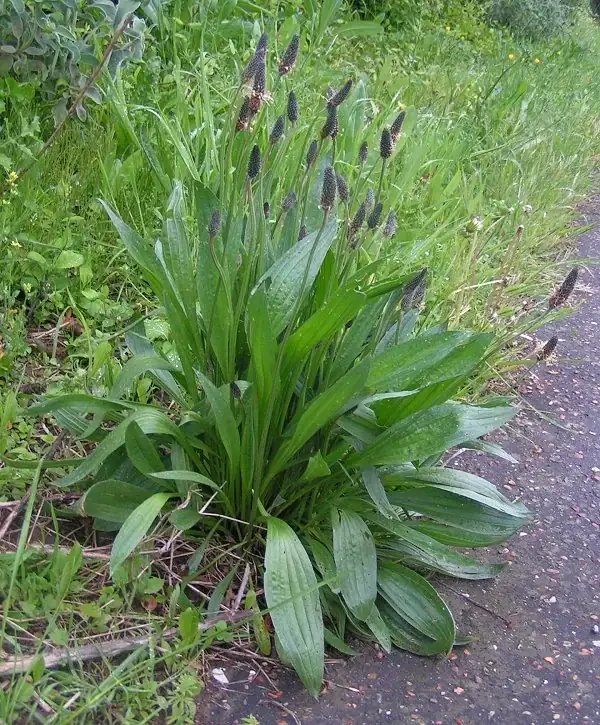
An illustration is not enough to identify a plant for consumption. Do not forage for a species based solely on this profile.
01 · UNDERSTAND
Properties & uses.
Throat and dry cough
Traditional relief of irritation of the mouth or throat and the associated cough.
Read the sourceThe traditional uses described are not clinical proof of effectiveness. Evidence for one preparation cannot automatically be applied to another.
02 · UNDERSTAND THE ACTION
How does the plant act?
Ribwort plantain leaf is mainly documented as a preparation that soothes irritated mucous membranes. Its traditional benefit concerns dry cough related to irritation, not all causes of cough. Mucilages and several phenolic compounds make certain local actions plausible, but controlled trials do not allow a robust clinical benefit to be measured. Laboratory effects do not demonstrate antibiotic activity in a person.
Constituents to know.
Their presence and quantity depend on the plant part and preparation.
- Mucilages
- Leaf polysaccharides; their contact with the mucosa contributes to the plausibility of a soothing effect.Read the reference
- Aucubin and catalpol
- Iridoids vary with maturity and drying; their presence alone cannot predict the efficacy of a syrup.Read the reference
Soothing an irritated throat
Leaf infusions and extracts have a traditional use for mouth and throat irritation and the associated cough.
Read the referenceMinor skin inflammation
Maceration for local use appears separately in the monograph; topical use cannot be inferred from a result obtained with a syrup.
Read the referenceWhat this means for preparation.
The words “Plantago lanceolata leaf” are more informative than the name “plantain” alone. A drinkable product and a maceration for local application have different conditions of use.
03 · EXAMINE THE EVIDENCE
What the research shows.
A laboratory or animal result alone does not demonstrate a benefit in humans. Each result must be read alongside the preparation studied and its limitations.
What the syrup study shows
- Type of research
- Prospective pharmacovigilance study examined by the EMA.
- Preparation concerned
- Syrup containing a liquid hydroalcoholic extract of Plantago lanceolata.
- Observed results
- Improvements in respiratory symptoms were reported.
- Limitations to consider
- Without a placebo group, it is impossible to distinguish the syrup's specific effect from the episode's natural course; this is not comparative evidence.
What can we take from this?
Research does not support promises of treating infectious bronchitis or transferring these results to seeds of other plantains.
Documentary review dated 09/10/2026. The references remain available to check the context.
04 · CHOOSE A PREPARATION
One plant, several preparations.
Only forms documented in this profile’s sources are presented.
InfusionLeaf · Route: oral
MacerationLeaf · Route: topical
Local or oromucosal use, depending on the preparation.
Please note: Use immediately after preparation.
Read the sourceExtractLeaf · Route: oral
Specific pharmaceutical preparations.
Please note: Age and concentration specific to the product.
Read the source05 · BEFORE ANY USE
Precautions & contraindications.
This guidance does not cover every individual situation. Missing information is not a guarantee of safety.
Contraindications
- Allergy to plantain or its pollen.
Medicine interactions
- None reported in the monograph; check medications.
Adverse effects
- No known adverse effects in the monograph; this does not guarantee the absence of a reaction.
Pregnancy & breastfeeding
Pregnancy and breastfeeding: medicinal use is not recommended due to insufficient data.
Children & adolescents
Depending on the preparation: age thresholds of 3, 6 or 12 years. Oral infusion is not recommended under 12.
If symptoms persist, worsen or are unusual, consult a healthcare professional. In an emergency, contact the emergency services.
06 · PUTTING KNOWLEDGE INTO PRACTICE
Preparations & recipes.
A DOCUMENTED PREPARATION
Ribwort plantain infusion
Reference for mouth or throat irritation with dry cough, and cough associated with a cold. Traditional use; robust clinical trials have not established this preparation’s efficacy.
Plant part: Dried leaves
Ingredients & quantities
- 2 g dried, cut Plantago lanceolata L. leaves
- 150 ml boiling drinking water
Preparation steps
- Weigh the identified, dried, cut plant part supplied for this use.
- Pour 150 ml boiling drinking water over the herb.
- Steep for 5–15 minutes: the EMA glossary’s general reference, as the monograph gives no specific duration. Follow the product leaflet first.
- Strain and allow to cool to a comfortable temperature before use.
Use: For adults aged 18+ in this collection. One preparation per dose, 2–3 times daily, giving 4–6 g leaves daily. This 2 g/150 ml version lies within EMA’s range of 1.4–2 g/150–250 ml. Seek advice if symptoms last over one week, worsen, or if fever, breathing difficulty or purulent sputum develops.
Storage: Prepare immediately before use. No storage period is established here; do not make a stock batch (EMA glossary, §4).
Before you start. Contraindicated with ribwort plantain or its pollen allergy. Stop if a reaction occurs. The monograph reports no interactions; this does not guarantee compatibility with medicines. Drinking the tea is not recommended under 12; age limits for extracts cannot be transferred to it. Use is not recommended during pregnancy or breastfeeding because data are insufficient.
A DOCUMENTED PREPARATION
Plantain mouth rinse — cold maceration
Local reference for mild mouth and throat irritation. Traditional use; robust clinical trials have not established this preparation’s efficacy.
Plant part: Dried leaves
Ingredients & quantities
- 1.4 g dried, cut Plantago lanceolata L. leaves
- 150 ml room-temperature drinking water
Preparation steps
- Weigh the identified, dried, cut plant part supplied for this use; use clean utensils.
- Add 150 ml drinking water at room temperature.
- Leave to macerate for 1–2 hours, stirring frequently: the method described in the EMA assessment report for this preparation. Follow the product leaflet first.
- Strain and use immediately; do not leave to soak overnight.
- Use as a mouth rinse, then spit out. This entry does not describe a drink.
Use: For adults aged 18+ in this collection. One preparation per use, 3–4 times daily. Spit out after rinsing. Seek advice if symptoms last over one week, worsen, or if fever, breathing difficulty or purulent sputum develops.
Storage: Use immediately after preparation, as required by the monograph. Do not store or make ahead.
Before you start. Contraindicated with ribwort plantain or its pollen allergy. Stop if a reaction occurs. The monograph reports no interactions; this does not guarantee compatibility with medicines. Do not use if unable to spit out reliably. Persistent mouth pain needs dental assessment. Use is not recommended during pregnancy or breastfeeding because data are insufficient.
A DOCUMENTED PREPARATION
Plantain compress — cold maceration
External reference for minor, superficial skin inflammation. Traditional use; robust clinical trials have not established this preparation’s efficacy.
Plant part: Dried leaves
Ingredients & quantities
- 1.4 g dried, cut Plantago lanceolata L. leaves
- 150 ml room-temperature drinking water
Preparation steps
- Weigh the identified, dried, cut plant part supplied for this use; use clean utensils.
- Add 150 ml drinking water at room temperature.
- Leave to macerate for 1–2 hours, stirring frequently: the method described in the EMA assessment report for this preparation. Follow the product leaflet first.
- Strain and use immediately; do not leave to soak overnight.
- Soak a clean dressing and apply locally to the small affected area; do not keep it under an airtight dressing.
Use: For adults aged 18+ in this collection. Apply with a clean dressing, 3–4 times daily. The source specifies no contact duration. Seek advice after one week, earlier if the area spreads or becomes painful, hot or weeping.
Storage: Use immediately after preparation, as required by the monograph. Do not store or make ahead.
Before you start. Contraindicated with ribwort plantain or its pollen allergy. Stop if a reaction occurs. The monograph reports no interactions; this does not guarantee compatibility with medicines. This is not sterile: do not put in eyes or on deep or infected wounds or substantial burns. Avoid crushed, freshly picked leaves directly on skin. Use is not recommended during pregnancy or breastfeeding because data are insufficient.
A DOCUMENTED PREPARATION
Ribwort plantain — mouth rinse, ages 6–12
Traditional demulcent use for mild irritation of the mouth or throat. This preparation is intended for local contact then spitting out; it is not a tea to drink.
EMA/HMPC/887979/2022, revision 1 adopted in 2025, section 4.2: oromucosal macerate from age 3. This chapter selects ages 6–12, only if the child can spit reliably, with supervision.
Read the complete children’s chapterPlant part: Dried cut leaves
Ingredients & quantities
- 1.4 g pharmaceutical-quality dried, cut Plantago lanceolata L. leaves
- 150 ml cold drinking water
Preparation steps
- Confirm with the pharmacist that the child can rinse and spit reliably. An adult weighs the leaves and prepares a clean container.
- Add 150 ml cold water; leave for 1–2 hours, stirring frequently. This time is described in the EMA assessment report for this preparation. Follow the leaflet first.
- Strain carefully with clean equipment and use immediately. Do not leave to macerate overnight.
- Under adult supervision, rinse then spit out. Do not drink. Do not offer to a child who usually swallows mouthwash.
Use: EMA reference: a preparation of 1.4 g/150 ml, 3–4 times daily for oromucosal use. The monograph gives no numbered rinsing duration. Consult if symptoms exceed one week, and earlier for worsening symptoms, fever or difficulty swallowing.
Storage: The monograph requires use immediately after preparation. Discard the remainder; no stock for later in the day or the following day.
Before you start. Before medicinal use in a child, ask a pharmacist or doctor to confirm the product and dose. Contraindicated with allergy to ribwort plantain or its pollen. Do not substitute an infusion to drink: oral herbal tea from the leaves is not recommended under 12 in the same monograph. The macerate is not sterile: clean equipment, controlled raw material and immediate use are essential. This protocol does not treat bacterial tonsillitis or replace an examination.
07 · CHECK THE SOURCES
Sources for this profile.
- EMA — Plantaginis lanceolatae folium: dossier and documentsAccessed on 09/10/2026
- EMA — Ribwort plantain — mouth rinse, ages 6–12: paediatric sourceAccessed on 09/10/2026
- ANSES — precautions for herbal supplements, June 2023 tableAccessed on 09/10/2026
- EMA — scientific assessment report: Plantago lanceolataAccessed on 09/10/2026
- EMA — Glossary on herbal teas: general preparation method, §4Accessed on 09/10/2026
- EMA — Ribwort plantain, final 2025 report: 1–2 hour macerationAccessed on 09/10/2026
Illustration: sannse · CC BY-SA 3.0. View the original image and its licence. Image resized and converted to WebP.
A TOUCH OF SOLÉA
Myriam’s tip
Myriam is reviewing the tip for this profile.
Myriam