Identity & origin
BOTANICAL IDENTITY
The right name is the first step.
Valerian: guidance on the underground organs, with the uses and precautions specific to the documented preparations.
Also known as: No synonyms listed.
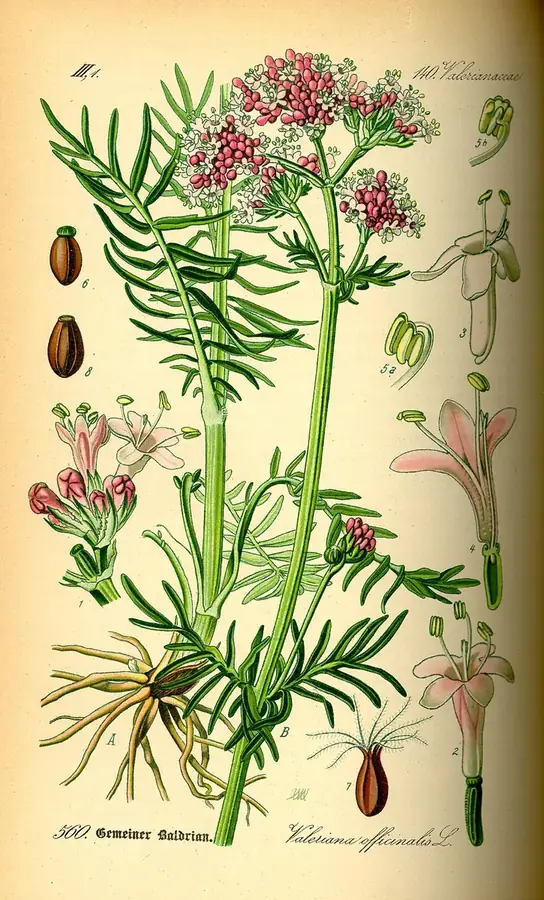
The botanical name and part used must match the profile; a photograph alone is not sufficient grounds for consuming a plant.
An illustration is not enough to identify a plant for consumption. Do not forage for a species based solely on this profile.
Uses & evidence
UNDERSTANDING THE USES
Properties & uses.
Sleep and nervous tension
A dry root extract using 40–70% ethanol (DER 3–7.4:1) has EMA well-established medicinal use for mild nervous tension and sleep disorders. Overall findings remain inconsistent; do not generalise to teas or chronic insomnia.
EMA status applies only to the described preparation and indication, not every form of the plant.
Read the sourceOther preparations
Traditional use for mild stress and to aid sleep.
Use considered plausible in a traditional-use monograph. That status alone does not demonstrate clinical efficacy.
Read the sourceThe traditional uses described are not clinical proof of effectiveness. Evidence for one preparation cannot automatically be applied to another.
Precautions before use
BEFORE ANY USE
Precautions & contraindications.
This guidance does not cover every individual situation. Missing information is not a guarantee of safety.
Contraindications & precautions
- Source-listed contraindicationAllergy to the substance or preparation.Source
- PrecautionMay impair alertness: do not drive or operate machinery if affected.Source
- Source-listed contraindicationFull bath: open wound, extensive skin injury, acute skin disease, high fever, severe infection, severe circulatory disorder or cardiac insufficiency.Source
Medicine interactions
- Possible interactionPossible additive sedation, not systematically proven: avoid alcohol or sedative medicines without professional advice. The EMA monograph reports no established interaction.Source
“Reported” does not prove causality; “possible” may reflect indirect evidence. “None reported” means none in the cited source, not that all combinations have been studied. Do not stop a prescribed treatment based on this profile.
Adverse effects
- Nausea and abdominal cramps.
Pregnancy & breastfeeding
Insufficient data: medicinal use is not recommended during pregnancy or breastfeeding. This data gap is distinct from an established contraindication.
SourceChildren & adolescents
Medicinal use is not recommended below 12 years because data are insufficient; adult preparations and doses cannot be extrapolated.
SourceIf symptoms persist, worsen or are unusual, consult a healthcare professional. In an emergency, contact the emergency services.
Forms & how they are used
DOCUMENTED FORMS
One plant, several preparations.
Only forms documented in this profile’s sources are presented.
Dry extractUnderground organs · Route: oral
Defined ethanolic extract.
Please note: Results cannot be transferred to all extracts. Do not drive or use machinery.
Read the sourceHerbal teaUnderground organs · Route: oral
Preparations: ingredients & steps
DOCUMENTED PREPARATIONS
Preparations & recipes.
A DOCUMENTED PREPARATION
Valerian root infusion — traditional sleep support
The infusion is a traditional preparation used to aid sleep. EMA’s well-established-use category applies to specified hydroalcoholic extracts, not to this herbal tea.
Plant part: Dried cut root
Ingredients & quantities
- 0.3–3 g dried cut root of Valeriana officinalis L.
- 150 ml boiling drinking water
Preparation steps
- Check the botanical name and plant part on a quality-controlled herbal tea; weigh the herb.
- Pour 150 ml boiling drinking water over the herb in a heatproof container.
- Steep for 5–15 minutes unless the product leaflet says otherwise. This is the EMA glossary’s general method; the monograph gives no preparation-specific time.
- Strain, then allow to cool to a comfortable temperature before drinking.
Use: Traditional EMA reference: one dose half to one hour before bedtime; the monograph mentions an earlier evening dose if needed. Follow the product leaflet. Seek advice if problems persist or worsen; do not transfer the 2–4-week course for particular extracts to this tea.
Storage: Prepare immediately before use, following the EMA glossary. The monograph provides no domestic storage period; do not prepare a stock batch.
Before you start. For adults aged 18+ in this collection. Not recommended during pregnancy or breastfeeding because sufficient safety data are lacking. Contraindicated with valerian allergy. May impair alertness: do not drive or operate machinery if affected. Nausea and abdominal cramps are possible. Do not combine with sedative treatment on your own; ask a pharmacist. No interactions are reported in this monograph; this does not establish compatibility with medicines. Ask a pharmacist if you take medication.
A DOCUMENTED PREPARATION
Valerian root bath — evening ritual
Traditional use for mild mental stress and sleep support. Clinical findings for some oral extracts do not establish this bath’s effectiveness.
Plant part: Dried, cut Valeriana officinalis L. root
Ingredients & quantities
- 100 g correctly identified dried, cut valerian root.
- 1 L hot water to prepare the additive, then water for a full bath at 34–37°C.
Preparation steps
- Pour 1 L boiling water over 100 g cut root in a suitable vessel.
- Infuse for 5–15 minutes, then strain: this is the general EMA glossary interval, not a valerian-specific duration; the product leaflet takes precedence.
- Add all the strained liquid to the bath water. Check the final temperature is 34–37°C.
- Bathe for 10–20 minutes. Both the concentrated additive and bath water are for external use only.
Use: At most one full bath daily according to the monograph. Seek advice for persisting or worsening symptoms; do not replace assessment of ongoing insomnia.
Storage: Prepare the bath immediately before use; discard after use. Follow the dried-herb packaging and expiry date.
Before you start. Adults only. Do not drink this preparation. Valerian allergy is a contraindication. Full baths are contraindicated with open wounds, extensive skin injuries, acute skin disease, high fever, severe infection, severe circulatory disturbance or heart failure. Pregnancy/breastfeeding: not recommended because data are insufficient. Valerian may reduce alertness: do not drive if affected. No interaction is reported, which does not establish absence of interactions; seek advice if taking sedative medicine.
A DOCUMENTED PREPARATION
Valerian & lemon balm — a pharmacy evening formula
Traditional use for mild nervous restlessness, mild stress or difficulty falling asleep.
Keep the exact formula, plant parts and preparation stated below. Some blends require a specified ready-made product or professional preparation. Do not create your own substitutions.
Plant part: Valerian root, lemon balm leaves; remaining parts are listed in ingredients.
Ingredients & quantities
- 1 pre-dosed 1.6 g sachet of the cited product; do not recreate it. Reference: DR. KOTTAS Nerven-Schlaftee.
- Per sachet: 0.64 g valerian root (Valerianae radix); 0.4 g lemon balm leaves (Melissae folium).
- Also contains peppermint leaves, orange flowers (Aurantii flos) and liquorice root as botanical excipients; individual amounts are undisclosed.
- 125 ml boiling water.
Preparation steps
- Pour 125 ml boiling water over one sachet.
- Cover for 10 minutes; squeeze and remove the sachet.
- Drink lukewarm in small sips.
Use: Adult leaflet: 1 cup 3 times daily for mild restlessness/stress OR 1–2 cups 30 minutes before bedtime. Do not combine the schedules on your own. Seek medical advice if worsening or not improved after 14 days.
Storage: The leaflet gives no storage period for the prepared infusion; prepare for immediate use rather than storing a batch. Store sachets according to their packaging and expiry date.
Before you start. This record applies only to the cited pre-dosed product, after a pharmacist checks its current leaflet. Do not recreate or modify the mixture at home. General information, not a replacement for diagnosis or treatment. May cause drowsiness. Liquorice is present even among the excipients: medicines need checking. Contraindications: Allergy to any plant, menthol or an excipient. SmPC: studies unavailable, caution required. SOLÉA: no self-use during pregnancy/breastfeeding, particularly because liquorice is present. Do not combine with diuretics, cardiac glycosides, corticosteroids, stimulant laxatives or medicines worsening electrolyte imbalance without the prescriber’s decision. Liquorice may counteract antihypertensive medicines. Avoid other liquorice products or foods. Never stop prescribed treatment to take herbal tea.
Properties, interactions & contraindications
Read before using this blend.
Do not stop or change a prescribed treatment. Show the exact ingredients and quantities to your pharmacist, including any other herbal products you take.
This review combines the exact formula’s source with ingredient-specific references. It does not establish synergy, assess every medicine, or guarantee that the mixture is suitable for you. “None reported” means no reports in the cited source, not proven compatibility.
Additional review needed: Orange flowers: pharmacopoeial identity of the batch · Multi-species liquorice: precautions covered in the formula review. The blend’s leaflet and warnings remain essential.
Review of the exact formulaDR. KOTTAS Nerven-Schlaftee · Cited pre-dosed pharmaceutical product
Preparations covered by this ingredient review: infusion. These forms cannot be substituted for one another.
Documented uses and limits
- The formula combines two plants traditionally used for calm and sleep; other plants are excipients without demonstrated additional benefit.↗
- Registration rests on traditional use. The leaflet does not establish clinical efficacy or synergy between ingredients. Findings for concentrated extracts cannot be transferred to this infusion.↗
Contraindications
- Allergy to any plant, menthol or an excipient.↗
Medicines and interactions
- Insufficient dataSmPC §4.5: interaction studies have not been performed; none known were reported. This does not exclude interactions.↗
- Possible interaction · cautionSedatives, sleeping medicines and alcohol: ask a pharmacist about the combination because alertness may be impaired; precaution, not a clinical interaction established by this leaflet.↗
- Interaction reported in the sourceDo not combine with diuretics, cardiac glycosides, corticosteroids, stimulant laxatives or medicines worsening electrolyte imbalance without the prescriber’s decision. Liquorice may counteract antihypertensive medicines. Avoid other liquorice products or foods. Never stop prescribed treatment to take herbal tea.↗
- Possible interaction · cautionEMA reports a modest change in exposure to some CYP3A4-metabolised medicines after 300 mg/day glycyrrhizin for 14 days. This warrants a pharmacist’s check; the studied glycyrrhizin dose is not the dose in this mixture and does not establish a clinical interaction for this sachet.↗
Precautions and adverse effects
- May impair driving or operating machinery; do not drive if affected.↗
- Liquorice is present, sometimes as an excipient of undisclosed quantity. The 2026 EMA monograph advises against use with hypertension, kidney, liver or cardiovascular disease, or hypokalaemia. Risk from this sachet cannot be quantified without its glycyrrhizin content.↗
- Liquorice use is not recommended during pregnancy or breastfeeding, or for women of childbearing potential without contraception. Fluid retention, hypokalaemia, hypertension, arrhythmias and hypertensive encephalopathy have been reported, particularly with high or prolonged intake.↗
- Nausea and abdominal cramps; frequency unknown.↗
Pregnancy, breastfeeding and children
ValerianValeriana officinalis · Dried underground parts (root, rhizome, stolons).
Preparations covered by this ingredient review: infusion. These forms cannot be substituted for one another.
Read the plant’s current safety profileDocumented uses and limits
- Tea: traditional use for mild stress and sleep. Clinical results from ethanolic extracts do not validate tea.↗↗↗
What is known about its action
- GABA-related effects are studied with extracts/constituents; the clinical mechanism of tea is unestablished.↗↗↗
Contraindications
- Allergy to the plant.↗
Medicines and interactions
- No interaction reported in this sourceNo interaction reported in the monograph; combination safety is unproven.↗
- Interaction reported in the sourceA case involving valerian + passionflower + lorazepam was reported: individual contributions cannot be isolated. Pharmacist review before combining.↗
Precautions and adverse effects
Pregnancy, breastfeeding and children
Lemon balmMelissa officinalis L. · Leaf
Preparations covered by this ingredient review: infusion. These forms cannot be substituted for one another.
Read the plant’s current safety profileDocumented uses and limits
- Mild digestive complaints with bloating/flatulence; mild stress and sleep support.↗
What is known about its action
- Digestive results vary by extract; some extract tests were negative while oil/citral showed experimental activity. This does not establish equivalence to tea.↗
Contraindications
- Allergy to lemon balm.↗
Medicines and interactions
- Possible interaction · cautionAqueous extracts experimentally inhibit TSH activity; clinical relevance is unknown. This is not a proven levothyroxine interaction. Ask for thyroid-medicine review.↗
- Insufficient dataThe monograph states no interaction data, not absence of risk.↗
Precautions and adverse effects
- May impair alertness: do not drive if affected.↗
- No adverse effect identified in this monograph; monitoring remains necessary.↗
Pregnancy, breastfeeding and children
PeppermintMentha × piperita L. · Leaf
Preparations covered by this ingredient review: infusion. These forms cannot be substituted for one another.
Read the plant’s current safety profileDocumented uses and limits
- Mild digestive discomfort, including indigestion and flatulence.↗
What is known about its action
- Oil and menthol experimentally affect digestive smooth muscle and calcium movement. Trials of enteric-coated oil capsules do not establish leaf-tea efficacy.↗
Contraindications
- Allergy to peppermint or menthol.↗
Medicines and interactions
- No interaction reported in this sourceNo interaction reported in the monograph; this does not establish compatibility with every medicine.↗
Precautions and adverse effects
- Avoid in reflux: heartburn may worsen. Caution with gallstones or biliary disease.↗
- Worsening reflux or heartburn; frequency unknown.↗
Pregnancy, breastfeeding and children
Documentary review: 2026-10-09
This plant in documented blends
These recipes have their own formula and precautions. The dose of a single plant cannot be transferred to a blend.
Understanding the plant’s actions
EXPLORE THE EVIDENCE
How does the plant act?
Valerian probably acts through several compounds and mechanisms; it cannot be reduced to one sedative molecule. The roots and other underground organs are the material studied. The EMA distinguishes a precisely defined ethanolic dry extract, with clinical data for mild nervous tension and sleep disorders, from other forms recognised on the basis of tradition. This framework does not mean that a herbal tea will produce the same effect as an extract.
Constituents to know.
Their presence and quantity depend on the plant part and preparation.
- Valerenic acids
- Sesquiterpenes studied in receptor modulation; their content does not account for all the activity of the extract.Read the reference
- Valepotriates
- Unstable compounds whose presence varies with preparation and storage; no single established clinical active ingredient.Read the reference
GABA inhibitory signaling
Cell experiments show interactions with GABAergic systems, which are involved in neural inhibition. Results vary with the extracts and do not prove a single mechanism in humans.
Laboratory or animal observation. A human benefit cannot be inferred from this finding alone.
Read the referenceSleep and mild tension
Clinical results support a dry extract with a herbal substance/extract ratio of 3–7.4:1 obtained with 40–70% ethanol.
A human study may be positive, negative or inconclusive. Read the findings, preparation and limitations.
Read the referenceWhat this means for preparation.
The intended action may be gradual: the plant is not an immediate rescue treatment. Valerian medicines may impair the ability to drive or operate machinery, including in dry-extract form.
Studies, findings & limitations
THE RESEARCH
What the research shows.
A laboratory or animal result alone does not demonstrate a benefit in humans. Each result must be read alongside the preparation studied and its limitations.
Why the studied extract must be identified
A human study may be positive, negative or inconclusive. Read the findings, preparation and limitations.
- Type of research
- EMA assessment of clinical trials and their consistency.
- Preparation concerned
- Defined ethanolic dry extract of the underground organs.
- Observed results
- The data support the well-established use recognized for this preparation.
- Limitations to consider
- Sleep measurement methods and preparations differ; the results do not prove the efficacy of all powders, herbal teas or combinations.
What can we take from this?
Persistent insomnia can have several causes. The data in this profile do not demonstrate a treatment for severe anxiety disorders or equivalence with a hypnotic medicine; they do not justify improvised sedative combinations.
Documentary review dated 09/10/2026. The references remain available to check the context.
Sources & last review
CHECKING REFERENCES
Sources for this profile.
- EMA — Valerianae radix: dossier and documentsAccessed on 09/10/2026
- EMA — Valerianae aetheroleum: dossier and documentsAccessed on 09/10/2026
- ANSES — precautions for herbal supplements, June 2023 tableAccessed on 09/10/2026
- EMA — Valerian: final assessment, EMA/HMPC/150846/2015, p.17Accessed on 09/10/2026
- EMA — monographie finale, indication et sections 4.3 à 4.8 reluesAccessed on 09/10/2026
- EMA — Glossary on herbal teas, §4: freshly prepared infusionsAccessed on 09/10/2026
- BASG — DR. KOTTAS Nerven-Schlaftee, HERB-00057, RCP 12/2020, §2, 4.1–4.9, 6.1–6.5Accessed on 09/10/2026
- EMA — Glycyrrhiza spp., radix, monographie finale révision 1, EMA/HMPC/108399/2024, publiée 20/07/2026, §4.4–4.6,4.9Accessed on 09/10/2026
- NCCIH — Valerian, mai 2025Accessed on 09/10/2026
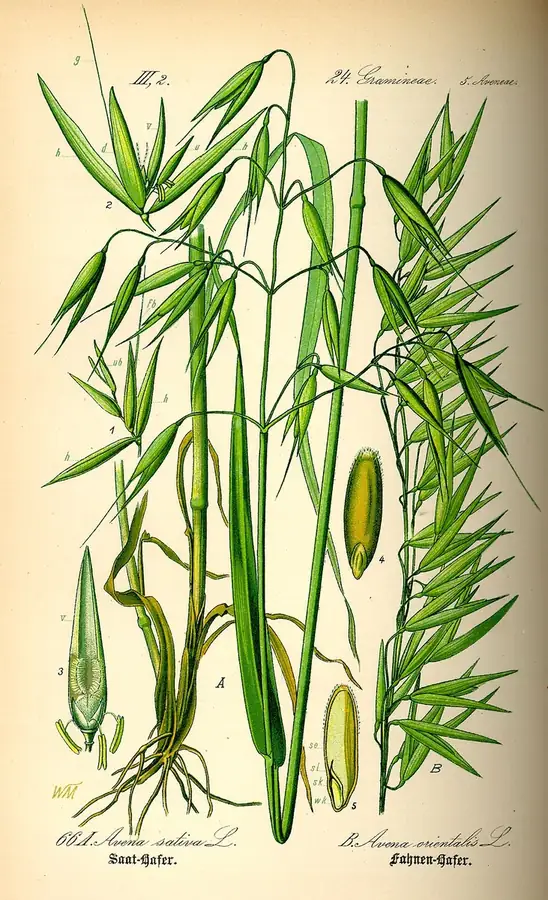
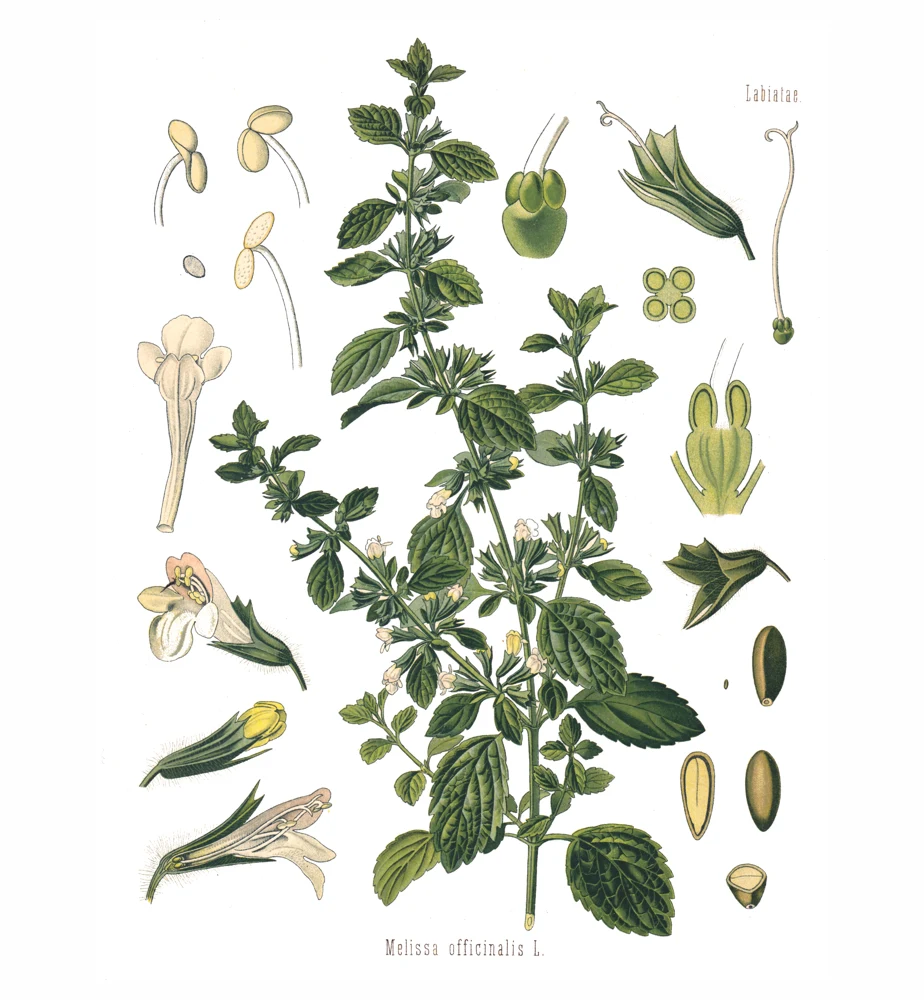
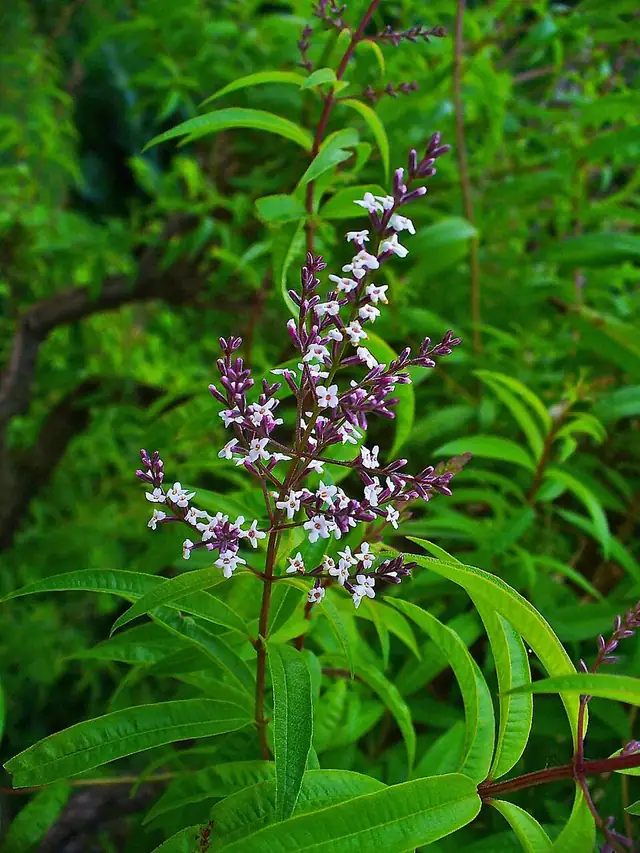
Image: Flora von Deutschland, Österreich und der Schweiz — Otto Wilhelm Thomé (1885), via Wikimedia Commons · Public domain. View the original image and its licence. Image resized and converted to WebP.